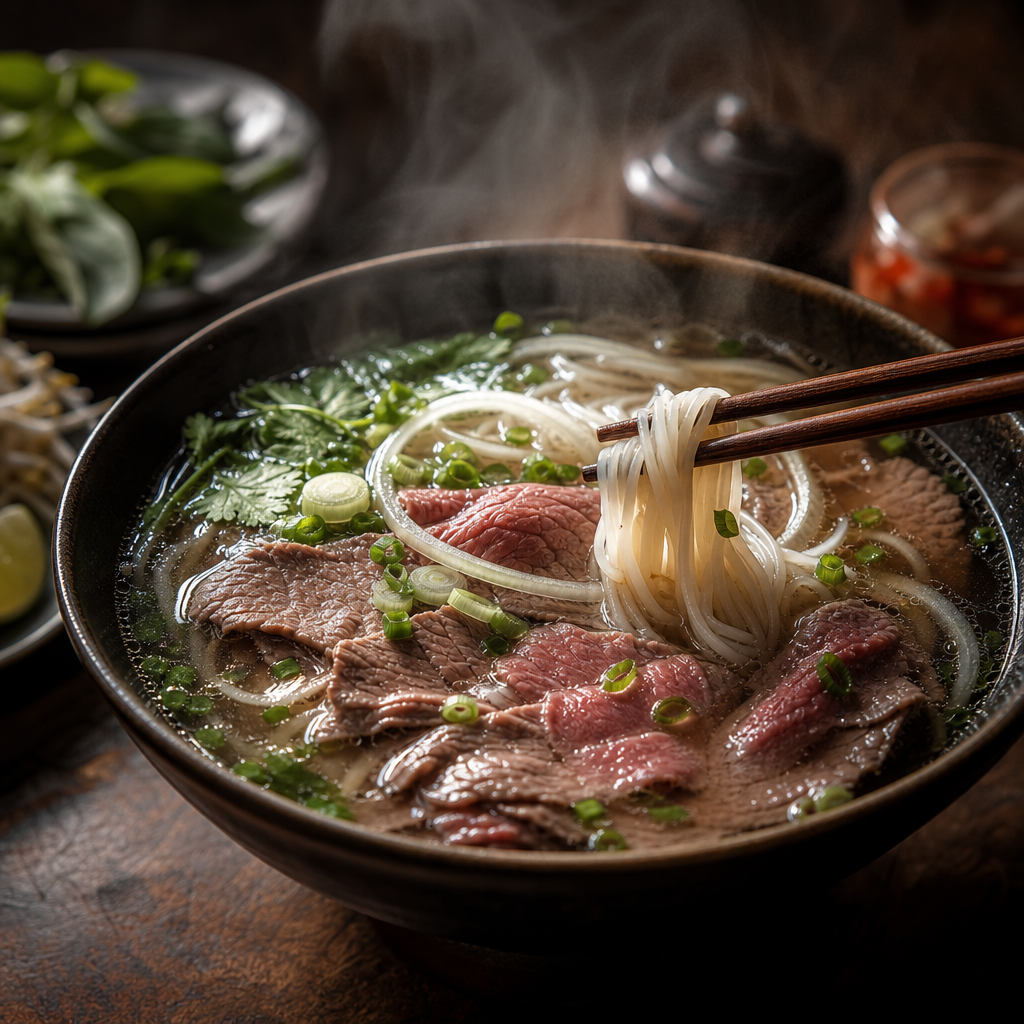
Is the Rare Beef in Pho Safe to Eat?
It's one of the most common questions new pho drinkers ask: those pink, almost-raw slices of beef floating in the broth — are they actually safe? For most healthy people, the answer is yes. The rare beef in pho, known as tai, is not thrown into a cold bowl and served. It's sliced paper-thin, laid over hot noodles, and then bathed in broth that comes out of the pot near boiling. That combination — extreme thinness plus intense heat — is what cooks the meat.
The reason it looks so rare is that the cooking happens fast and gently, right in front of you (or on the way to your table), rather than through a long boil beforehand. By the time you lift the first bite, the slices have usually already turned from bright red to a cooked grey-brown, especially where the broth has touched them. Any remaining pink is easy to finish with a quick press under the hot liquid.
That said, "safe for most people" is not the same as "safe for everyone." As with any lightly cooked beef anywhere in the world, some groups are generally advised to choose fully cooked options. We'll cover exactly who, and what to order instead, further down. If you're new to the dish entirely, our Pho 101 guide is a friendly place to start.
What Is Pho Tai (Rare Beef Pho)?
"Tai" is the Vietnamese word for the thinly sliced rare beef served in pho. Order "pho tai" and you'll get a bowl where the star protein is lean, raw-when-plated beef — usually eye of round or a similar tender cut — sliced so thin you can almost see through it. It's arguably the most popular way to order beef pho, prized for its silky, delicate texture.
Tai is just one of several traditional beef cuts you'll find across a pho menu. Many bowls combine it with well-done cuts — brisket, flank, tendon, tripe — and the grand combination of all of them is the famous "special" bowl. If you want the full breakdown of every cut and what they taste like, our pho dac biet guide covers the entire lineup.
What makes tai distinctive is the cooking method. Unlike the brisket, which is fully simmered before it reaches you, tai is cooked à la minute — the very hot broth does the work in the bowl. That's why the freshness of the slice and the temperature of the broth both matter so much, and why the technique of thin slicing is the whole point of the dish.
How Does the Rare Beef Actually Cook in the Bowl?
The short version: heat travels through thin food fast, and pho broth is very hot. Put those two facts together and the "raw" beef cooks almost as soon as the broth hits it. A thick steak takes minutes on a hot grill because heat has to travel to the centre. A slice of beef shaved to a millimetre or two has almost no centre to reach — the heat penetrates all the way through in seconds.
Pho broth is served near boiling, roughly 90-95C (about 195-205F). That is far above the temperatures used to cook beef, and it's the reason the method works. When the broth is ladled over the slices, the surface heats immediately and the warmth drives inward. Within seconds the edges turn brown; within a minute or two, thin slices kept submerged are typically cooked through — though a folded or thicker slice can stay pink in the middle, which is why pushing the meat under the broth right away matters. This is lightly cooked beef, not a guaranteed level of doneness, and part of why higher-risk diners are advised to order fully cooked cuts instead.
This is the same principle behind shabu-shabu and other hot-pot styles, where thin slices of meat are swished through simmering liquid and cooked in moments. Pho tai simply does it for you, all at once, when the broth is poured. The trick that keeps it gentle — and the meat tender — is that the beef is cooked briefly in liquid rather than boiled hard for a long time.
It also helps to understand what that broth is: a bone-based stock simmered for 12 hours or more. If you're curious about how it's built, our guide to what the soup in pho is made of walks through it, and our make-pho-at-home guide shows the full process — including that final, all-important step of pouring boiling broth over the tai.
Is Pho Beef Actually Raw When It's Served?
It starts raw, but it rarely stays that way. The beef is placed in the bowl uncooked, and then the hot broth is poured over it. By the time your bowl travels from the kitchen to your table, most of the tai has already changed colour — from bright red to the grey-brown of cooked beef, particularly on the surfaces the broth has reached. What looks like "raw beef pho" in photos is usually a snapshot taken the instant before or just as the broth goes in.
A little pink is normal and expected with tai. Rare beef is, by definition, pink in the middle. If you see slices that are still pink because they were folded, stacked, or shielded from the broth, that's not a sign anything is wrong — it just means those pieces haven't been fully submerged yet. Pressing them flat under the hot broth for 30 seconds to a minute finishes them.
This is a key difference from dishes like steak tartare or carpaccio, which are intentionally served fully raw and never heated. Pho tai is meant to be cooked in the bowl — the raw stage is only the beginning. That distinction matters, because it means the safety picture for pho tai is closer to lightly cooked beef than to a raw-beef preparation.
Who Should Order Their Pho Beef Well-Done?
For the general population, rare beef in pho is a normal, well-established way to enjoy the dish. But some groups are broadly advised — for any lightly cooked meat, not just pho — to choose fully cooked options. As general guidance, this typically includes:
- People who are pregnant — public-health guidance generally recommends avoiding rare or undercooked meats during pregnancy.
- People who are immunocompromised — those with weakened immune systems from illness or treatment.
- Young children and older adults — both groups are often advised to be cautious with lightly cooked meats.
The good news is that pho makes this effortless. The dish already includes fully cooked cuts, so ordering well-done isn't a special request — it's a standard menu choice. Ask for chin (well-done brisket), nam (flank), or gan (tendon), all of which are fully cooked before they reach the bowl. Most restaurants will also drop your rare slices into the broth pot to cook them through if you simply ask.
This is general information, not medical advice. If you're pregnant, have a health condition, or are unsure what's right for you, ask your doctor or a registered dietitian. For broader context on eating pho with dietary considerations in mind, see our Vietnamese food allergies and dining guide and our overview of how healthy pho is.
How Do Restaurants Handle Rare Beef Safely?
Serving rare beef well is about more than hot broth. A careful kitchen manages the beef from delivery to bowl, and the near-boiling broth is the final step rather than the only safeguard. Here's what good pho restaurants do:
Fresh slicing
Beef is sliced thin close to service, not left cut for long, which keeps the meat fresh and reduces surface exposure.
Cold chain
The raw beef is kept refrigerated until the moment it goes into the bowl, limiting the time it spends at unsafe temperatures.
Near-boiling broth
Broth is ladled over the slices at roughly 90-95C — hot enough to cook paper-thin beef almost instantly.
Clean separation
Good kitchens use dedicated tools and boards for raw meat to prevent cross-contamination with ready-to-eat items.
High turnover
A busy restaurant uses its beef quickly, so slices spend less time in storage before they reach your bowl.
Cook-to-order option
Any reputable kitchen will fully cook your beef in the broth pot on request — just ask for well-done.
Two of these deserve extra emphasis. First, fresh slicing: beef that's cut close to service, from properly stored meat, is fresher and has had less time and surface area exposed. Second, the cold chain: keeping the raw beef refrigerated right up until it hits the bowl limits the window in which bacteria can grow. Hot broth cooks the surface, but good handling before that step is what makes the whole system reliable.
At Pho By Night in Ottawa's ByWard Market, our beef comes from halal-certified suppliers, is sliced fresh, kept cold until service, and cooked by broth we simmer for 12+ hours from those same halal-sourced bones. We've served Ottawa since 2000, and if you'd rather skip rare meat, we're always happy to prepare your bowl well-done.
Rare Beef vs the Other Pho Cuts
Tai is the only common cut cooked rare in the bowl. Every other traditional beef cut is fully cooked before it's served, which is worth knowing if you'd prefer no rare meat at all. Here's how the five classic cuts compare:
| Cut | How It's Cooked | Texture | Notes |
|---|---|---|---|
| Tai (rare beef) | Cooks in the bowl | Silky, tender, slightly pink | Placed raw; near-boiling broth cooks it in seconds to minutes |
| Chin (brisket) | Fully cooked before serving | Firm, a little chewy, deeply savoury | Simmered in broth beforehand — the go-to well-done option |
| Nam (flank) | Fully cooked before serving | Lean with a light chew | Fully cooked; a good choice if you want no rare meat |
| Gan (tendon) | Slow-cooked until gelatinous | Soft, springy, melting | Simmered for hours until tender — never served rare |
| Sach (tripe) | Fully cooked before serving | Chewy, spongy, mild | Cleaned and cooked thoroughly before it enters the bowl |
If you want the tender in-bowl-cooked experience, order tai. If you'd rather everything be fully cooked, chin and nam are your friends. And if you want to taste the whole spectrum in one bowl, the special combination — explained in our pho dac biet guide — brings them all together. For a bigger-picture look at the dish, the ultimate guide to pho ties it all together.
Tips for First-Timers Eating Rare Beef Pho
If pho tai is new to you, a few small habits make the whole thing easy and let you cook the beef to exactly your liking:
- Push the slices under the broth right away. As soon as your bowl arrives, use your chopsticks to submerge any pink slices for 30 seconds to a minute — the hot broth finishes cooking them.
- Eat the tai early. Rare beef is at its most tender in the first few minutes. Enjoy it before it firms up in the broth.
- Don't over-cook it. Leaving the slices in a long time makes them chewy. A quick submerge is all it needs.
- Ask for well-done if you prefer. There's no wrong choice — request chin or nam, or ask the kitchen to cook your tai through.
- Add garnishes after, not before. Let the broth cook the beef first, then build in herbs, bean sprouts, lime, and chili to taste.
For the full etiquette — chopsticks, spoon, sauces, and the order to do everything in — our how to eat pho guide covers it step by step, and the toppings and garnishes guide explains what each plate of herbs is for.
Frequently Asked Questions About Rare Beef in Pho
Is the rare beef in pho safe to eat?
For most healthy people, yes. The rare beef in pho (pho tai) is sliced paper-thin and placed in the bowl raw, then near-boiling broth around 90-95C is poured over it. Those wafer-thin slices heat through quickly, turning from red to brown within a minute or two — though how fully each slice cooks depends on its thickness and staying submerged in the hot broth, and some diners enjoy them still pink. As with any lightly cooked beef, pregnant, immunocompromised, and very young diners should ask for well-done cuts instead.
Is pho tai actually raw when it is served?
It starts raw but rarely stays fully raw. The beef is laid into the bowl uncooked, then very hot broth is ladled over it. By the time the bowl reaches your table the slices have usually turned from bright red to a cooked grey-brown, especially where the broth touches them. Any pink you see is where the slice was folded or shielded — pushing those pieces under the broth for a moment finishes them.
How hot is pho broth when it is poured over the beef?
Pho broth is served near boiling, typically around 90-95C (about 195-205F). That is well above the temperatures used to cook thin beef and hot enough to sear the surface of paper-thin slices almost instantly. The steam rising from the bowl is a good visual cue that the broth is hot enough to cook the tai.
What is the difference between pho tai and pho chin?
Pho tai uses thinly sliced rare beef that cooks in the bowl, staying tender and slightly pink. Pho chin uses well-done brisket that was fully simmered in the broth beforehand, so it arrives completely cooked and a little chewier. If you prefer no rare meat at all, ordering chin (or a chin-based combo) is the simple, fully-cooked option.
Can I order pho with no rare beef?
Absolutely. Just ask for well-done cuts — brisket (chin), flank (nam), or tendon (gan) are all fully cooked before serving. Many restaurants will also drop your rare slices into the broth pot to cook them through if you ask. You never have to eat beef more rare than you are comfortable with.
Who should avoid rare beef in pho?
As general guidance, people who are pregnant, immunocompromised, older adults, and young children are usually advised to avoid rare or lightly cooked meats and should ask for well-done cuts. This is not a claim specific to pho — it applies to any lightly cooked beef. If you have a medical condition or are unsure, ask your doctor or a registered dietitian.
How do restaurants keep rare beef safe?
Good kitchens slice the beef fresh, keep it cold until service, use clean equipment to avoid cross-contamination, and pour broth that is near boiling. Fresh slicing and a proper cold chain matter as much as the hot broth. A busy restaurant with high turnover also means the beef spends less time in storage before it is used.
Why is the beef in pho sliced so thin?
Thin slicing does two jobs at once: it lets the hot broth cook the meat almost instantly, and it keeps each bite tender. A thick cut of beef would stay raw in the middle when broth is poured over it, but a paper-thin slice heats all the way through in seconds. The thinness is the whole reason the in-bowl cooking method works.
What if my rare beef still looks pink after the broth is added?
A little pink is normal and expected with tai — that is what rare beef looks like. If it makes you uncomfortable, simply use your chopsticks to press the slices flat under the hot broth for 30 seconds to a minute, and they will finish cooking to grey-brown. You can also ask your server to cook it more.
Is rare beef pho different from steak tartare or raw beef dishes?
Yes. Steak tartare is intentionally served fully raw and never heated. Pho tai is meant to be cooked in the bowl by the hot broth — the raw stage is just the starting point. It is closer to a quick shabu-shabu style cook than to a raw-beef dish, because the near-boiling broth is doing real cooking on those thin slices.
Does the rare beef make pho taste better?
Many diners think so. Because the tai cooks gently in the broth rather than being boiled hard beforehand, it stays tender and soaks up the aromatic broth. That soft, silky texture is a big part of why pho tai is one of the most popular ways to order the dish. If you prefer firmer, deeply-flavoured meat, well-done brisket has its own appeal.
Is the rare beef at Pho By Night safe and halal-friendly?
At Pho By Night in Ottawa's ByWard Market, our beef comes from halal-certified suppliers, it is sliced fresh, kept cold until service, and cooked by our near-boiling broth simmered 12+ hours from halal-sourced bones. If you would rather skip rare meat, just ask for well-done brisket or flank — we are happy to prepare your bowl the way you like it.
Try Pho Tai in Ottawa's ByWard Market
At Pho By Night, our fresh-sliced beef is cooked by broth we simmer 12+ hours from halal-sourced bones. Order it tai, order it well-done — however you like your bowl, we'll make it that way.
Share This Guide
Related Articles
What Is Pho Dac Biet?
The special combo pho — all five beef cuts explained
How to Eat Pho
Chopsticks, garnishes, and the right order to do everything
The Ultimate Guide to Pho
History, regional styles, and everything in one place
What Is the Soup in Pho Made Of?
Inside the 12+ hour bone broth that cooks the beef
Is Pho Healthy?
Complete nutrition guide — calories, bone broth, and more
Pho Toppings & Garnishes Guide
What every herb, sprout, and sauce on the plate is for