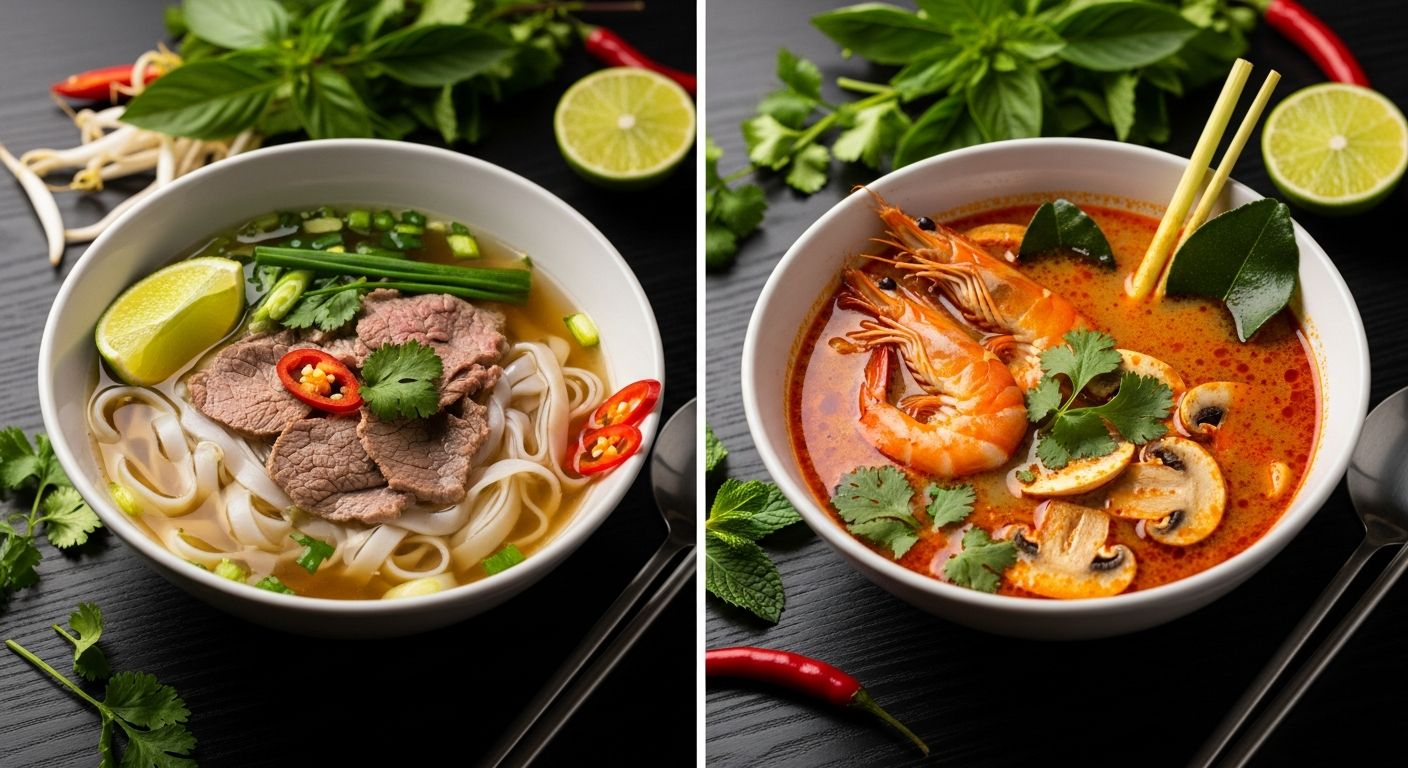
Pho vs Tom Yum
Vietnamese noodle soup meets Thai hot and sour soup
Two iconic Asian soups, two different culinary traditions — here is how they compare
Two Soups, Two Worlds of Flavour
Vietnamese pho and Thai tom yum are two of the most famous soups in Asian cuisine, but they could not be more different. Pho is patience — a clear bone broth simmered for 12 or more hours, delicately spiced with star anise and cinnamon, served with silky rice noodles and an interactive plate of fresh herbs. Tom yum is intensity — a hot, sour broth that hits you immediately with lemongrass, galangal, chili, and lime.
If pho is a long, slow sunset, tom yum is a flash of lightning. Both are beautiful in their own way. Both have deep cultural significance. Both have genuine health benefits. And both are among the most searched-for soups on the internet. But they come from completely different culinary philosophies and use almost entirely different ingredients.
At Pho By Night in Ottawa's ByWard Market, we have spent over 26 years perfecting our pho — slow-simmered halal-certified broth, authentic Vietnamese spices, and the freshest herbs. This guide compares both soups in detail so you can understand what makes each one special. Whether you are deciding what to order or just curious about the differences, we have you covered.
Pho vs Tom Yum: Full Comparison
A side-by-side look at every major difference between these two iconic soups.
Origin
Vietnam (early 1900s, northern Vietnam)
Thailand (central Thai cuisine)
Broth Style
Clear, slow-simmered bone broth (12+ hours). Subtle, aromatic, gently warming.
Hot and sour broth. Bold, tangy, intensely herbal. Made quickly with aromatics.
Key Aromatics
Star anise, cinnamon, cloves, cardamom, charred ginger, charred onion
Lemongrass, galangal, kaffir lime leaves, chili paste, fresh lime juice
Heat Level
Not spicy by default. Heat is added at the table with sriracha or fresh chili slices.
Spicy by default. Chili paste and fresh chilies are core broth ingredients.
Main Protein
Beef (rare, brisket, tendon, meatballs) or chicken. Halal-certified options at Pho By Night.
Shrimp (tom yum goong) is most common. Also made with chicken or mixed seafood.
Noodles
Flat rice noodles (banh pho) — always included, a defining element of the dish.
Traditionally no noodles. Some versions add rice vermicelli or glass noodles.
Fresh Herbs
Thai basil, cilantro, bean sprouts, lime — added at the table by the diner.
Cilantro for garnish. Lemongrass and kaffir lime are cooked in the broth, not added raw.
Calories
350-550 calories per bowl (varies by protein choice)
150-300 calories per bowl (lower due to less meat and no noodles typically)
When Sick
Excellent. Bone broth provides collagen, ginger reduces nausea, and broth hydrates gently.
Good. Spice clears congestion, lemongrass has anti-inflammatory properties.
Which Soup Should You Choose?
Choose Pho If You...
- Want a subtle, layered flavour experience
- Enjoy interactive dining (adding herbs, adjusting)
- Prefer a heartier meal with noodles and beef
- Are eating when sick and want gentle comfort
- Want a high-protein, bone broth-based meal
- Are looking for halal-certified options
Choose Tom Yum If You...
- Love bold, immediate spice and sourness
- Prefer a lighter, lower-calorie soup
- Enjoy shrimp or seafood as your protein
- Want intense herbal flavours (lemongrass, galangal)
- Are looking for something without noodles
- Crave a tangy, appetite-stimulating starter
How Pho and Tom Yum Compare to Other Asian Soups
Pho and tom yum are just two members of a vast family of Asian soups. Japanese ramen uses wheat noodles in a rich, often pork-based broth — it is heavier than pho and uses completely different seasonings (miso, soy sauce, or salt-based tare). Korean sundubu-jjigae is a spicy soft tofu stew that shares tom yum's bold heat but has a completely different base. Chinese wonton soup is delicate like pho but features dumplings instead of noodles.
What sets Vietnamese pho apart from all of these is the combination of slow-simmered bone broth, aromatic spices, fresh herb garnishes, and the interactive dining ritual. No other Asian soup gives you as much control over your own bowl. For a detailed comparison of pho vs ramen specifically, read our Pho vs Ramen nutrition comparison and our article on why many people prefer pho over ramen.
Frequently Asked Questions
Common questions about pho, tom yum, and how they compare.
Experience Authentic Vietnamese Pho
Slow-simmered halal-certified bone broth, fresh herbs, and 26 years of family tradition. Visit us at 309 Dalhousie St in Ottawa's ByWard Market and taste the difference that patience makes.