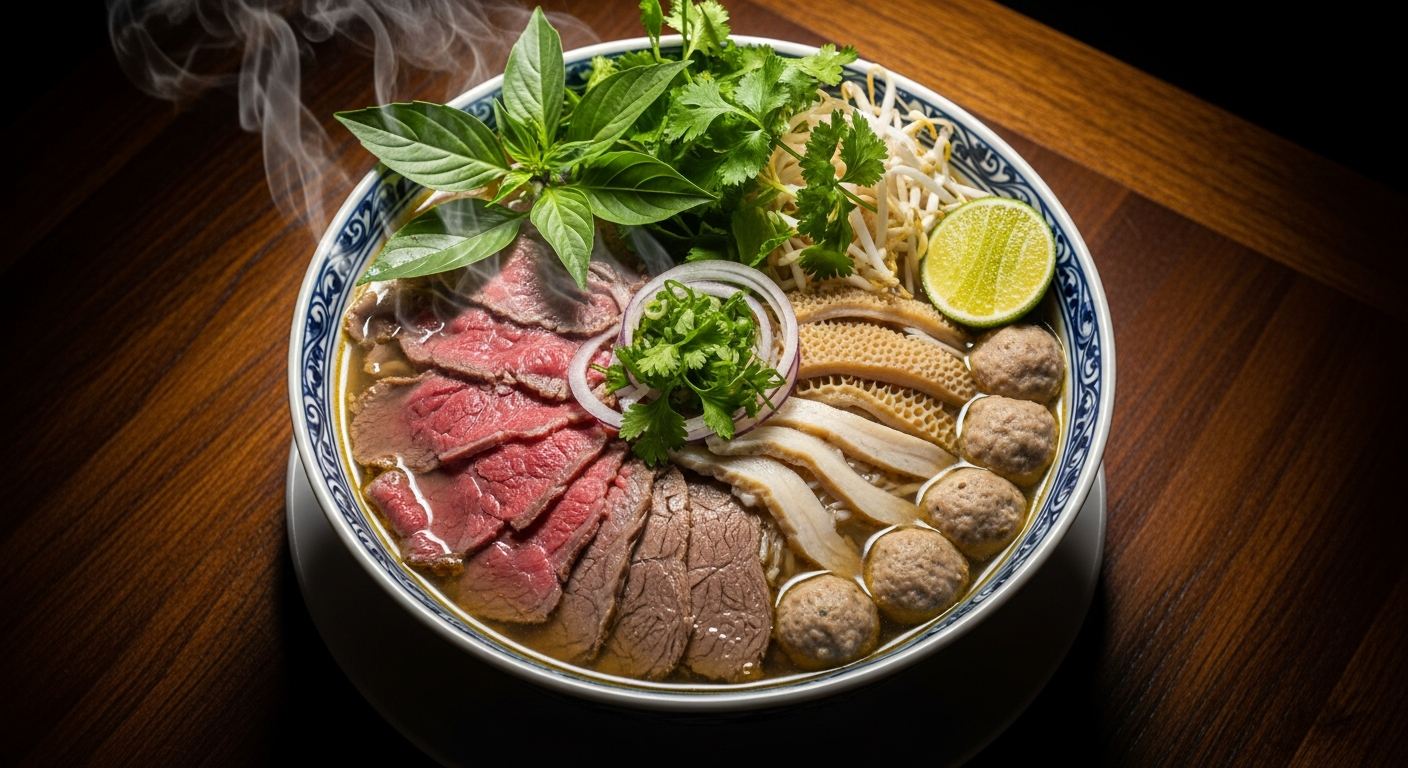
What Is Pho Dac Biet?
The complete guide to Vietnamese special combination pho
Meaning, pronunciation, all five meat cuts, and how to order like a regular
What Pho Dac Biet Means
If you have seen pho dac biet on a Vietnamese restaurant menu, it means “special pho” or “combination pho.” Pronounced roughly “fuh dahk bee-et,” it usually refers to a bowl that combines several beef cuts rather than featuring just one. The exact combination varies by restaurant.
While other pho varieties feature a single type of meat — rare beef (pho tai), brisket (pho chin), or chicken (pho ga) — dac biet gives you everything. Rare beef slices, well-done brisket, soft tendon, springy tripe, and bouncy meatballs, all swimming in a golden broth that has been simmered for 12 or more hours with charred onion, ginger, star anise, cinnamon, and cloves.
At Pho By Night in Ottawa's ByWard Market, pho dac biet combines rare beef, brisket, tendon, tripe, and meatballs in slow-simmered broth. Our broth uses halal-certified beef. The owner's mother oversees the recipes and food quality, especially the pho broth.
Whether you are a first-time pho eater curious about what to order, or a regular who wants to understand the Vietnamese names on the menu, this guide covers everything about pho dac biet — from the meaning and pronunciation to each individual meat cut, nutrition facts, and tips for getting the most out of your bowl.
The Five Cuts of Pho Dac Biet
Each cut brings a different texture and flavour to the bowl. Here is what makes each one special.
Tai (Rare Beef)
Paper-thin slices of raw beef that cook gently in the hot broth when served. The beef turns from red to pink and absorbs the broth's flavour, giving the bowl a tender texture.
Chin (Brisket)
Well-done beef brisket that has been braised or simmered until tender. It adds a hearty beef flavour and a firmer texture alongside the rare beef slices.
Gan (Tendon)
Beef tendon that has been slow-cooked until it becomes soft and gelatinous. It has a unique, slightly chewy texture and a mild flavour that absorbs the broth beautifully. Tendon is prized in Vietnamese cuisine for its collagen content and satisfying mouthfeel.
Sach (Tripe)
Honeycomb beef tripe that is cleaned and simmered until tender. It has a distinctive springy texture and mild taste. Tripe is a traditional component of pho dac biet and is loved by adventurous eaters for its unique chewiness and ability to soak up broth flavours.
Bo Vien (Meatballs)
Vietnamese-style beef meatballs with a distinctive bouncy, springy texture. Made from finely ground beef that is pounded to create an elastic consistency unlike Western meatballs. They are sliced in half before serving and add a satisfying bite to the bowl.
Pho Dac Biet Nutrition: What to Know
Varies
Calories
by recipe and serving
Varies
Protein
by portion and meat
12+ hrs
Broth Time
slow-simmered
5 types
Meat Cuts
full combination
A bowl brings together rice noodles, broth, beef cuts, and optional fresh herbs and garnishes. Calories and protein depend on the recipe and serving size. Pho By Night does not have a tested nutrition analysis for this dish, so figures found online should be treated as estimates rather than exact values for our bowl.
If you are managing a dietary requirement, ask the restaurant about the current ingredients and portion. For general context on pho ingredients and nutrition considerations, see our Is Pho Healthy? guide.
How to Order and Eat Pho Dac Biet
Tips for getting the most out of your special pho experience.
For First-Timers
Pho dac biet lets you try several beef cuts in one bowl. Choose it if that variety appeals to you; order a single-cut bowl if you prefer a simpler start.
Taste the Broth First
Before adding any sauces or toppings, take a spoonful of the pure broth. This is 12+ hours of slow simmering in a single sip. Appreciate the depth of flavour before customising.
Add Garnishes Gradually
Start with Thai basil and a squeeze of lime. Add bean sprouts for crunch. Taste as you go. The fresh herbs transform the bowl with every addition — this is the interactive beauty of pho.
Hoisin and Sriracha on the Side
Dip your meat into a small side dish of hoisin sauce rather than pouring it directly into the broth. This keeps the broth clean and lets you control the flavour intensity of each bite.
Pho Dac Biet vs Other Pho Varieties
| Pho Type | Meats | Best For |
|---|---|---|
| Pho Dac Biet | Rare beef, brisket, tendon, tripe, meatballs | Try several beef cuts in one bowl |
| Pho Tai | Rare beef only | A focused beef flavour |
| Pho Chin | Brisket only | A well-done beef option |
| Pho Ga | Chicken | Chicken pho |
| Pho Chay | Tofu, mushrooms (vegan) | A plant-based bowl |
Frequently Asked Questions
Common questions about pho dac biet, ingredients, and ordering.
Explore More at Pho By Night
How to Pronounce Pho Dac Biet
Say it right: "fuh dahk bee-et" (with audio)
Asian Noodle Soups Compared
Pho vs ramen vs tom yum vs udon
Is Pho Healthy?
Nutrition facts and health benefits
Best Pho Restaurants in Ottawa
A locals' honest ranking
Halal-Friendly Pho
Our halal-certified options
Best Pho Near Me
How to find authentic pho anywhere