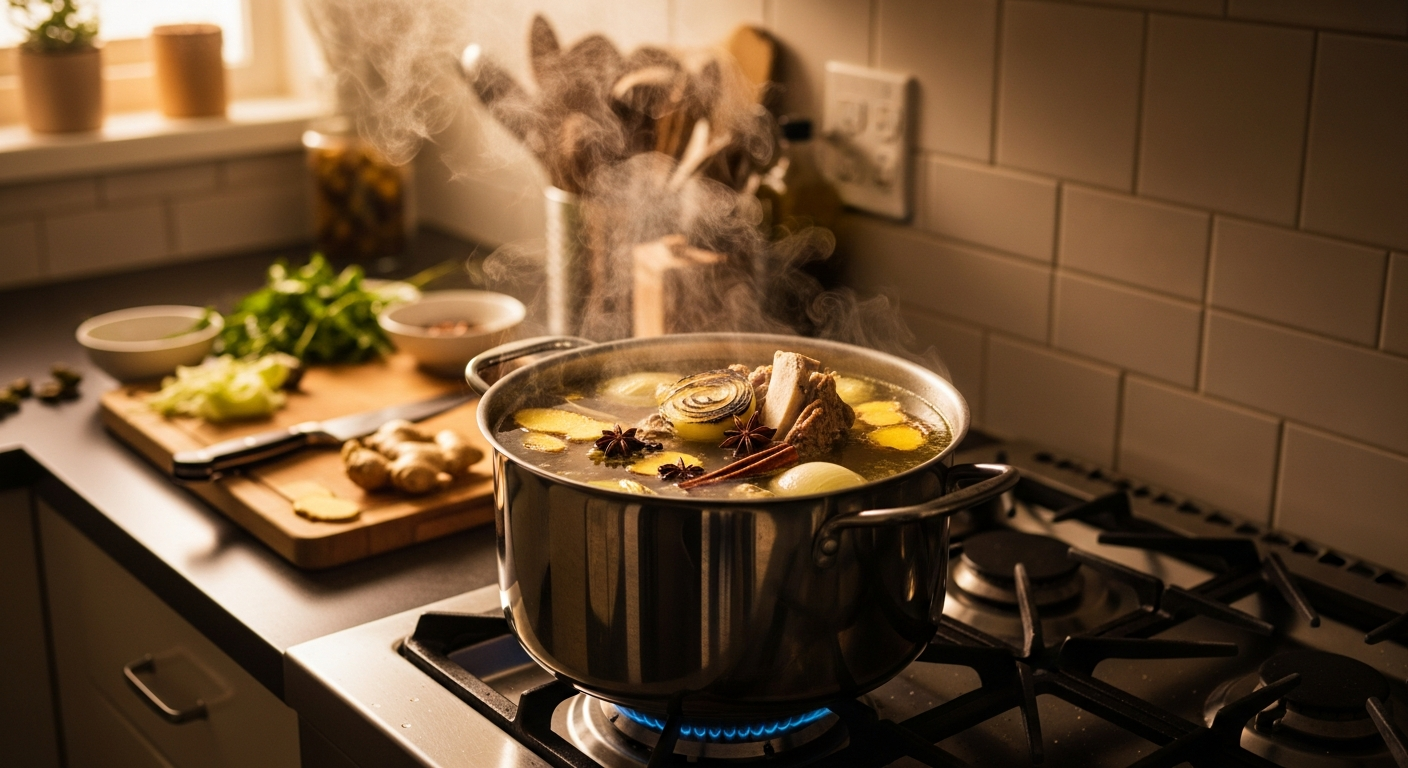
How to Make Pho at Home
An authentic Vietnamese pho recipe & broth guide
The real method behind a clear, aromatic broth — from Ottawa's ByWard Market pho experts
Quick Answer
To make pho at home: parboil and rinse beef bones for a clear broth, char ginger and onion, toast the pho spices (star anise, cinnamon, cloves, coriander, cardamom), then simmer everything gently for 6–12 hours. Season with fish sauce, rock sugar and salt, cook the rice noodles separately, and assemble with thin beef and fresh herbs.
Can You Really Make Pho at Home?
Yes — you absolutely can make authentic pho at home. It isn't difficult, but it does demand patience. The flavour that makes pho so special comes from one thing above all: a long, gentle simmer that slowly extracts collagen, marrow and aroma from beef bones and a carefully balanced spice blend.
The good news is that the hands-on work is minimal. Most of the time, the pot is just bubbling away quietly on the stove while you go about your day. The two things that separate a great homemade pho from a disappointing one are a clear broth and a properly toasted, balanced spice blend. Nail those and you're 90% of the way there.
This guide gives you the full method we'd teach a home cook — ingredients, the spice blend, the step-by-step broth technique, how to assemble the bowl, and the common mistakes that ruin a pot. We've been simmering broth daily at Pho By Night in Ottawa's ByWard Market for over 26 years, so this is the real thing, not a watered-down shortcut. (Though we'll share a shortcut too, for when you don't have all day.)
Ingredients You'll Need
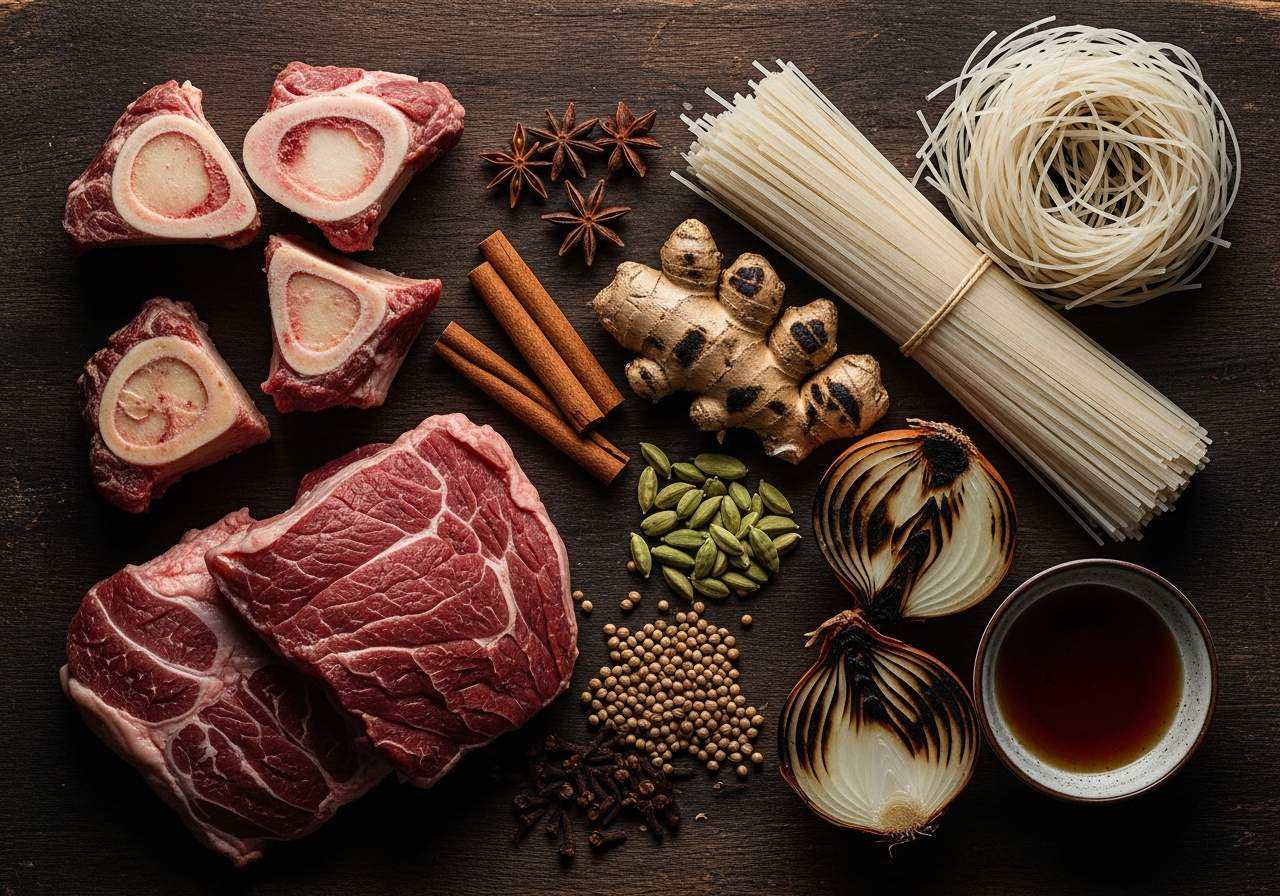
This makes roughly six generous bowls. You'll find everything at most Asian grocery stores. Quality bones are the foundation — ask your butcher for a mix of marrow and knuckle bones.
For the broth
- 2–3 kg beef bones (marrow + knuckle)
- 500 g beef brisket
- 1 large onion, halved
- Large piece of fresh ginger
- Fish sauce, rock sugar & salt
Aromatics & spices
- 4–5 star anise
- 1 cinnamon stick
- 3 whole cloves
- 1 tsp coriander seeds
- 2 cardamom pods
To serve
- Flat rice noodles (banh pho)
- Thinly sliced raw beef
- Thai basil & bean sprouts
- Lime wedges & chili
- Sliced spring onion
The Pho Spice Blend
These six aromatics are what make a broth unmistakably pho.
Star anise
The signature warm, liquorice-like aroma of pho.
Cinnamon
Adds sweetness and depth — use a stick, not powder.
Cloves
A little goes a long way; brings a gentle warmth.
Coriander seed
Earthy, citrusy backbone for the broth.
Cardamom
Floral, slightly minty lift that rounds it out.
Charred ginger & onion
Charring before simmering deepens the broth and adds colour.
Star anise is the dominant note — you can read more about it on Wikipedia. Toast the whole spices briefly before they go in; it wakes up the essential oils and makes the broth far more fragrant.
How to Make Pho Broth: Step by Step
The order matters. Follow these six steps for a clear, deeply flavoured broth.
- 1
Parboil the bones
Cover the beef bones with cold water, bring to a boil for 5–10 minutes, then drain and rinse them. This removes the scum and impurities and is the secret to a clear broth instead of a cloudy one.
- 2
Char the ginger and onion
Blacken the halved onion and ginger directly over a flame or under the broiler until fragrant and lightly charred. This builds the deep, smoky base note that defines real pho.
- 3
Toast the spices
Dry-toast the star anise, cinnamon, cloves, coriander and cardamom in a pan for a minute or two until aromatic. Tie them in a spice bag or cheesecloth so they're easy to remove later.
- 4
Simmer low and slow
Return the rinsed bones to a clean pot with fresh water, the charred aromatics, the spice bag and brisket. Bring to a gentle simmer — never a rolling boil — and skim the surface regularly. Simmer 6–12 hours.
- 5
Season the broth
Toward the end, season with fish sauce, a little rock sugar and salt. Taste and adjust. Remove the brisket once tender (around 1.5 hours) and slice it for serving. Strain the finished broth until clear.
- 6
Cook the noodles separately
Soak and cook the flat rice noodles just before serving, then drain. Never cook noodles in the broth itself — they cloud it and turn starchy.
Assembling the Bowl
This is the fun, fast part. Have everything ready, because once the broth hits the bowl you want to serve immediately.
Add a nest of freshly cooked rice noodles to a large warmed bowl. Lay thin slices of raw beef over the top — the heat of the broth will cook it in seconds. Add your cooked brisket, a little sliced onion and spring onion. Then ladle the screaming-hot broth straight over the beef so it cooks to a perfect blush.
Serve with a garnish plate of Thai basil, bean sprouts, lime and chili so everyone can finish their own bowl at the table. Not sure how to eat what you've made? Our how to eat pho guide covers the herbs, sauces and chopstick technique. For the full rundown of toppings, see our pho toppings & garnishes guide.
Beef Pho vs Chicken Pho
Pho Bo (Beef)
The original and most popular. Rich, deeply savoury broth from beef bones and brisket, simmered long with the full spice blend. This is the recipe above.
Pho Ga (Chicken)
Lighter and quicker. Use a whole chicken and chicken bones, the same charred aromatics, and a gentler hand with the spices. Ready in 2–3 hours and wonderfully soothing.
Want to go meat-free? Build the broth on charred onion, ginger, mushrooms and daikon with soy sauce instead of fish sauce. Curious how pho compares to other noodle soups? See pho vs ramen.
Pro Tips & Common Mistakes
Always parboil and rinse the bones.
Skipping this is the #1 cause of cloudy, murky broth. Ten minutes of blanching makes all the difference.
Simmer, never boil.
A hard boil emulsifies fat into the broth and turns it cloudy. You want lazy, gentle bubbles only.
Char your aromatics.
Raw ginger and onion taste flat. Charring them builds the smoky depth that makes pho taste like pho.
Skim often.
Keep removing the foam and scum that rises in the first hour for a cleaner, clearer result.
Cook noodles separately.
Noodles cooked in the broth release starch and cloud it. Always cook and drain them on their own.
Season at the end.
Add fish sauce, rock sugar and salt toward the finish and taste as you go — the broth reduces and concentrates over hours.
The 12-Hour Reality (and a Shortcut)
Here's the honest truth: a truly great pho broth takes the better part of a day. There's a reason a bowl at a restaurant costs what it does — you're paying for 12+ hours of simmering, a lot of bones, and a kitchen that does this every single day. We explain the full economics in why is pho so expensive.
The shortcut: a pressure cooker or Instant Pot can produce a respectable broth in about 1.5–2 hours. You still parboil the bones, char the aromatics and toast the spices — you just pressure-cook instead of simmering all day. It won't have quite the same silky depth, but on a weeknight it's a genuinely good bowl.
The ultimate shortcut: let us do the 12 hours for you. If you're in Ottawa, a bowl of our slow-simmered pho at 309 Dalhousie St is ready the moment you sit down — no bones, no skimming, no all-day simmer. See the full menu or find us via the best pho in Ottawa.
Frequently Asked Questions
Everything people ask about making pho at home.