How to Eat Pho
The complete guide to eating pho like a local
Chopsticks, spoon, herbs, sauces and etiquette — from Ottawa's ByWard Market pho experts
Quick Answer
Smell and taste the broth first, then add fresh herbs, bean sprouts, lime and chili to taste. Hold chopsticks in one hand and a soup spoon in the other — lift the noodles with the chopsticks, rest them in the spoon, and eat the noodles and broth together. Keep the hoisin and sriracha for dipping the meat, eat it hot, and slurping is welcome.
Is There a Right Way to Eat Pho?
Pho (pronounced "fuh", not "foh" — see our guide to pronouncing pho) is Vietnam's national dish: a fragrant bowl of slow-simmered bone broth, soft rice noodles, tender meat and a mountain of fresh herbs. It looks simple, but the way you eat it changes the whole experience.
There isn't one rigid "rule book," but there is a way locals have eaten pho for generations that brings out the best in every bowl. Get the rhythm right and the broth stays hot, the noodles stay springy, the herbs stay fragrant, and every spoonful is balanced. Get it wrong and you end up with a lukewarm, oversauced bowl of mush.
This guide walks you through exactly how to eat pho — step by step — plus how to use your chopsticks and spoon, when to add herbs and sauces, how to order, and the small etiquette details that separate tourists from regulars. It's the same advice we give first-timers at Pho By Night, where we've been serving Ottawa's ByWard Market for over 26 years. For a deeper dive into the dish itself, pair this with our ultimate guide to Vietnamese pho.
What's in a Bowl of Pho
Before you can eat pho like a pro, it helps to know what you're looking at. A classic bowl has four building blocks, and each one wants to be treated a little differently.
The broth
The soul of the dish — beef or chicken bones simmered 12+ hours with charred ginger, onion, star anise and cinnamon. Sip it throughout, not just at the end.
The noodles
Flat rice noodles (banh pho). They keep cooking in the hot broth, which is why pho is eaten quickly before they soften too much.
The protein
Thin rare beef, brisket, meatballs, chicken or tofu. Rare beef finishes cooking right in your bowl from the heat of the broth.
The garnishes
A side plate of Thai basil, bean sprouts, lime and chili that you add yourself. This is where you make the bowl your own.
Want the full breakdown of every herb, sauce and add-in? See our pho toppings & garnishes guide. Curious whether all this is good for you? Our is pho healthy article has the nutrition facts.
How to Eat Pho: Step by Step
Follow this order and every bowl will taste the way it's meant to.
- 1
Take in the aroma first
Before touching anything, lean in and smell the broth. Star anise, cinnamon, charred ginger and onion give pho its signature perfume. This first moment tells you a bowl was made properly.
- 2
Taste the broth on its own
Use your spoon to try the broth before adding anything. A great pho broth is balanced and clean — you should taste it as the kitchen intended before you start customising.
- 3
Add your fresh herbs
Tear Thai basil leaves off the stem and drop them in. Add bean sprouts for crunch, a squeeze of lime for brightness, and chili slices if you want heat. Add a little at a time — you can always add more.
- 4
Season to taste — sparingly
Hoisin and sriracha are best added to a side dish for dipping meat, not poured into the broth. If you do add them to the bowl, start with a small amount so you don't drown the broth's flavour.
- 5
Use chopsticks and spoon together
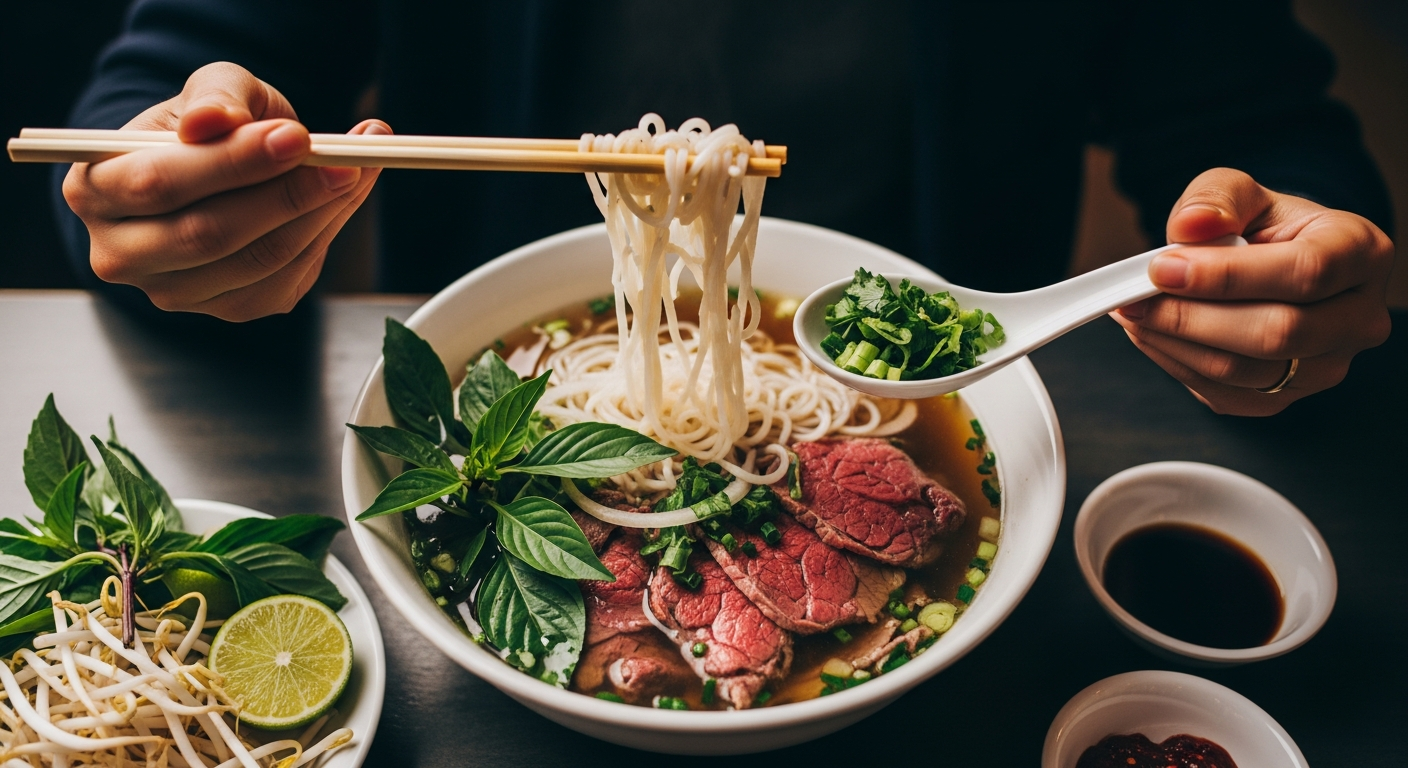
Hold chopsticks in your dominant hand and the spoon in the other. Lift noodles and toppings with the chopsticks, rest them in the spoon, then sip the broth that comes with them. This is the authentic two-handed rhythm.
- 6
Eat while it's piping hot
Pho is meant to be eaten fast and hot. The noodles keep softening in the broth, so don't linger. Slurping is welcome — it cools each bite and is considered a sign you're enjoying the meal.
Chopsticks & Spoon Technique
The single biggest "tell" of someone who knows pho is the two-handed technique. Pho is designed to be eaten with chopsticks and a spoon working together, not one after the other.
Hold your chopsticks in your dominant hand and the deep soup spoon in the other. Use the chopsticks to pull up a small bundle of noodles, beef and herbs. Twirl them gently against the inside of the bowl so they don't trail everywhere, then lower the bundle into the waiting spoon. Now you have noodles, toppings and a little broth in one perfect, drip-free bite. Bring the spoon to your mouth and go.
Between noodle bites, use the spoon on its own to drink the broth. This keeps you tasting the broth all the way through the meal rather than facing a bowl of plain soup at the end. And yes — slurping is encouraged. It cools each bite and pulls more aroma across your palate. It is not considered rude.
Near the very end, it's perfectly acceptable to lift the bowl with both hands to finish the last of the broth. No need to chase it around with your spoon.
Herbs, Sauces & Add-Ins
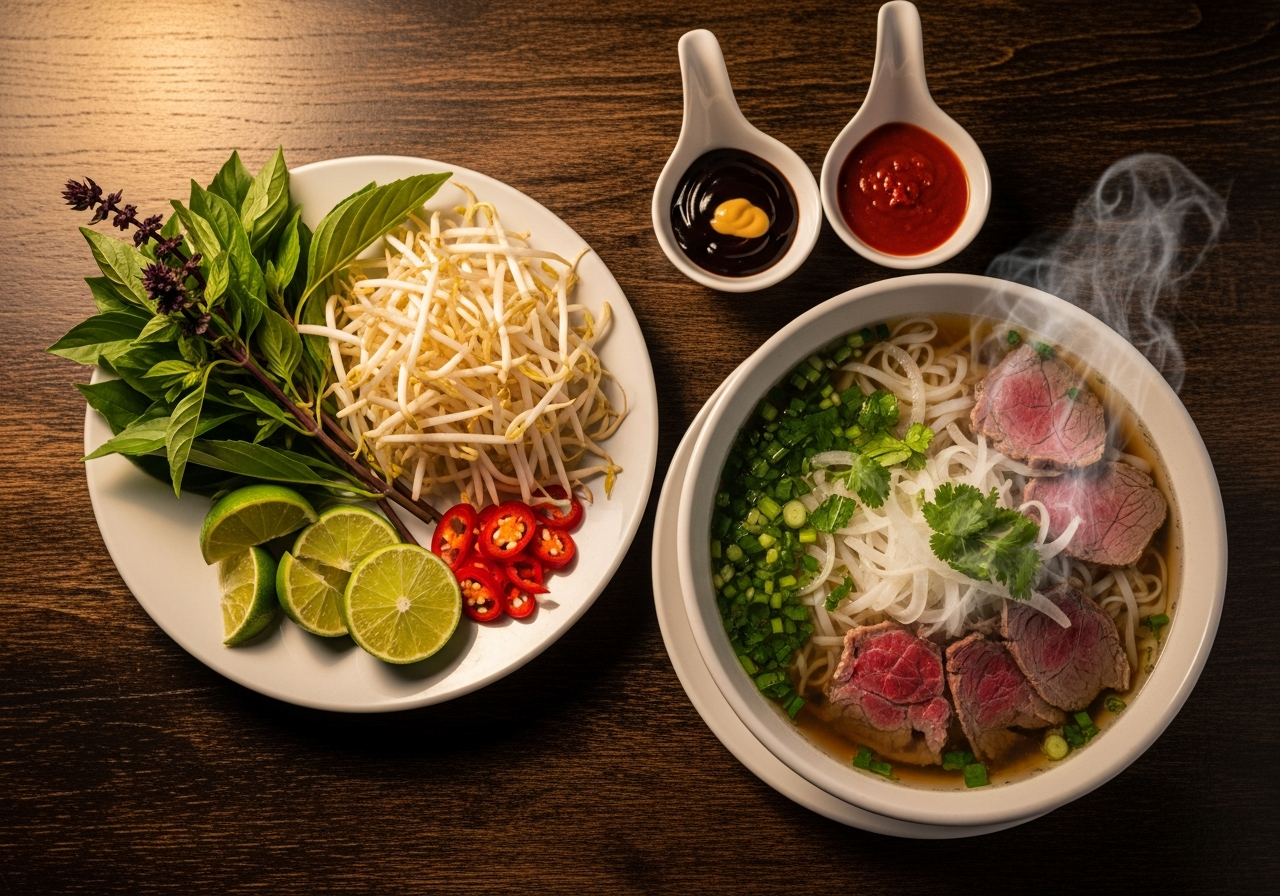
The garnish plate is where pho becomes your bowl. But timing and restraint matter. Add things gradually and taste as you go — it's easy to add more, impossible to take away.
Thai basil
Tear the leaves off the stem and push them under the hot broth for a few seconds to release the aroma. Add a few at a time so they stay fragrant.
Bean sprouts
Add for crunch and freshness. Some people blanch them in the broth first, others eat them raw — both are fine.
Lime
A squeeze brightens the whole bowl and balances the richness. Start with half a wedge and add more if you want.
Chili & sriracha
Fresh chili slices add clean heat. Sriracha and hoisin are best squeezed into a small side dish for dipping your beef and meatballs, rather than poured into the broth.
The hoisin-and-sriracha debate is real: purists keep them out of the broth entirely. According to Wikipedia's entry on pho, regional styles differ — the southern style tends to come with more garnishes and sauces than the northern style. Do what tastes best to you, just taste the broth first.
How to Order Pho
A pho menu can look intimidating, but it's mostly about which cut of meat you want. Here are the most common orders you'll see, including on our own menu:
| What to say | What you get |
|---|---|
| Pho tai | Rare beef that cooks in the hot broth — the classic first order. |
| Pho ga | Chicken pho — lighter and gentle, great for beginners or when you're unwell. |
| Pho dac biet | The 'special' combination with several cuts of beef. Order this to try a bit of everything. |
| Pho chay | Vegetarian/vegan pho with a plant-based broth and tofu. |
| Small vs large | Sizes are generous — a small bowl is a full meal for most people. |
Not sure what "dac biet" means? We break it down in what is pho dac biet. Want full control over your bowl? Try our build-your-own pho tool. And to round out the meal, a Vietnamese iced coffee is the perfect finish.
Pho Etiquette: Do's & Don'ts
Do
- Use both the chopsticks and the spoon at the same time
- Taste the broth before seasoning it
- Add herbs and lime gradually, to your taste
- Slurp the noodles — it's polite, not rude
- Eat it hot and fairly quickly
- Dip rare beef and meatballs in hoisin–sriracha on the side
Don't
- Don't dump every sauce into the broth at once
- Don't let the bowl sit until the noodles go mushy
- Don't cut the noodles with your spoon
- Don't be shy about using your hands for herbs
- Don't skip the garnish plate — it's part of the dish
- Don't drink all the broth first and leave the noodles
Common Mistakes to Avoid
Drowning the broth in sauce. The most common beginner mistake is squeezing in all the hoisin and sriracha before tasting anything. A 12-hour broth is already seasoned — taste it first, then dip your meat in sauce on the side if you want more.
Letting it sit. Pho noodles keep cooking in the hot broth and turn soft and starchy if you wait. Dig in as soon as it lands. This is also why takeout pho often comes with the noodles and broth packed separately.
Adding all the herbs at once. Dumping the whole garnish plate in immediately cools the broth and wilts everything. Add a little, eat, and add more as you go.
Skipping the spoon. The broth is half the dish. If you only use chopsticks you miss the best part. Use both. Still deciding between pho and other noodle soups? Our pho vs ramen comparison explains how the eating experience differs.
Frequently Asked Questions
Everything people ask about how to eat pho.