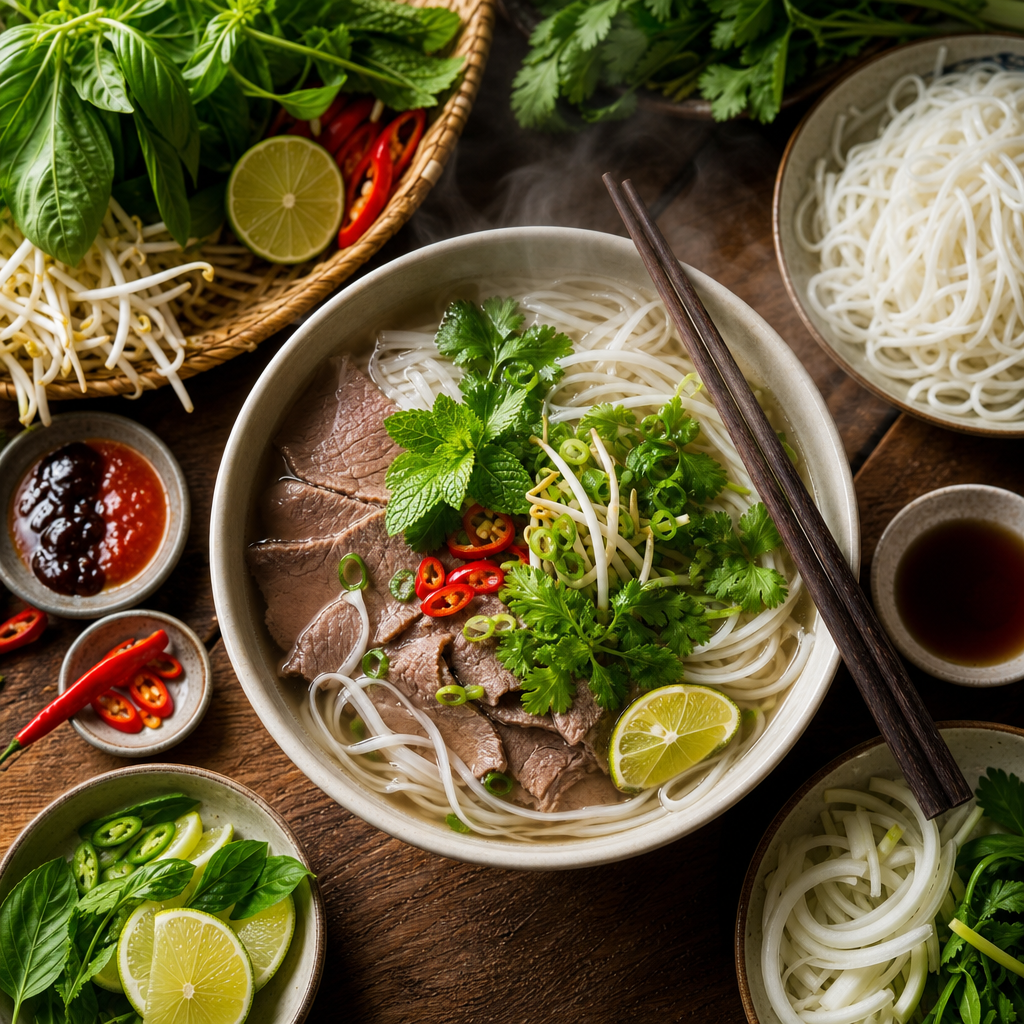
Is Pho Gluten-Free? What Actually Matters
Pho is often made with flat rice noodles, and a traditional broth may get its flavour from bones, aromatics, and spices. But recipes, packaged ingredients, and kitchen handling vary. Those common ingredients are a starting point for questions, not proof that a particular bowl is gluten-free.
For people with celiac disease, ingredient lists are only part of the answer. Wheat-containing sauces or broth seasonings can add gluten, and shared utensils, surfaces, or equipment can cause cross-contact. Ask about the restaurant's specific recipe and preparation process before ordering.
Whether a specific bowl suits your needs depends on several details:
- The noodles: rice noodles are usually made without gluten-containing ingredients; confirm the product and kitchen handling.
- The broth and seasonings: broth recipes vary, and packaged seasonings or stock products may contain wheat.
- The condiments and the kitchen: hoisin and soy sauce commonly contain wheat, and shared equipment can cause cross-contact.
If you are new to the dish, our ultimate guide to pho covers how pho is built from the ground up — useful context for understanding exactly where gluten could hide. This article is general dietary information, not medical advice; if you have celiac disease, always follow the guidance of your doctor or dietitian.
Are Pho Noodles Gluten-Free?
Traditional banh pho are rice-based and are often made without gluten-containing ingredients. Brands and restaurant handling can differ, so check the product or ask the kitchen about ingredients and preparation, especially if you have celiac disease.
The same is true across the rice-noodle family in Vietnamese cooking. Rice vermicelli (bun), the thin round noodles used in noodle bowls, is rice-based. So is the rice paper used to wrap fresh spring rolls. If you are curious about the different noodle types and how they are made, our guide to the best noodles for pho goes deeper on banh pho specifically.
One honest caveat for people who are highly sensitive: a small number of budget or fusion noodle products blend rice flour with wheat starch or use a mix that is not certified gluten-free. This is uncommon in traditional pho, but if you are cooking at home or dealing with celiac disease, read the package or ask the restaurant which noodles they use. For a fuller breakdown of what actually goes into the bowl, see what the soup in pho is made of.
Is Pho Broth Gluten-Free?
A traditional pho broth can be made with ingredients that do not contain gluten, such as bones, aromatics, and spices. Restaurant recipes and packaged seasonings differ, so that ingredient list is not enough to confirm a particular broth. Pho By Night simmers its broth for 12 hours or more; ask whether any sauces, stock products, or other seasonings are used.
Seasonings are one ingredient to check. Soy sauce, bouillon, stock powder, and other packaged products vary and may contain wheat. Ask what is used in the broth and whether the restaurant can explain how it handles cross-contact.
Fish sauce is often made without gluten-containing ingredients, but products and kitchen handling vary. Check the label or ask which product is used. Our guide to making pho at home explains common broth ingredients.
Which Pho Sauces and Condiments Contain Gluten?
Condiment ingredients are one part of the picture; broth seasonings and kitchen cross-contact matter too. Ingredients differ by brand and restaurant, so use this table as a prompt for questions, not as a guarantee that a particular bowl is safe.
| Condiment / Ingredient | Gluten Status | Notes |
|---|---|---|
| Soy sauce (regular) | Contains gluten | Brewed with wheat — typically contains gluten |
| Tamari (gluten-free type) | Usually gluten-free | Made with little or no wheat; check the label |
| Hoisin sauce | Contains gluten | Often thickened with wheat or made with wheat-based soy sauce |
| Fish sauce (nuoc mam) | Usually gluten-free | Often made with anchovies and salt; products vary, so verify the label |
| Sriracha | Usually gluten-free | Ingredients vary by brand; verify the label and kitchen handling |
| Chili oil / fresh chili | Usually gluten-free | Ingredients vary; verify packaged sauces and shared handling |
| Lime, fresh herbs, bean sprouts | Usually gluten-free | Usually gluten-free ingredients; shared prep can cause cross-contact |
| Rice noodles (banh pho) | Usually gluten-free | Traditionally rice-based; verify product ingredients and handling |
| Bouillon / stock base (some kitchens) | Check the source | May contain wheat or hydrolyzed wheat protein — ask |
The two biggest culprits are hoisin and regular soy sauce. Hoisin — the thick, sweet-savoury sauce many people squirt into their pho — is frequently thickened with wheat flour or made with a wheat-containing soy sauce. Standard soy sauce is brewed with wheat as well as soybeans. Both are optional. Because they sit on the table rather than in the pot, the easiest fix is simply to leave them off and season with fish sauce, lime, fresh chili, or a gluten-free sriracha instead.
If you cannot go without a dipping sauce, tamari is a soy sauce brewed with little or no wheat and is often labelled gluten-free — but always check the label, since not all tamari is certified. For a full rundown of every add-on, our pho toppings and garnishes guide explains what each one brings to the bowl.
Is Pho Safe for People With Celiac Disease?
A bowl made with ingredients that contain no gluten can still be exposed to cross-contact during preparation. For celiac disease, ask about both ingredients and kitchen procedures, including shared utensils and surfaces. A restaurant's answer about its process matters as much as the ingredient list.
For a checklist of questions to ask when dining out, see Celiac Canada's dining-out guidance.
A shared kitchen may prepare wheat-based dishes, use shared utensils or cutting boards, or cook items in the same space. A broth may also include a seasoning that contains wheat. Whether a restaurant can accommodate a specific need depends on its recipe and preparation; if the answers are unclear, choose another option.
A quick, honest safety framing
- Rice noodles and traditional broth may be made without gluten-containing ingredients — verify the recipe and handling.
- Check hoisin and soy sauce — some brands contain wheat, so verify before using them.
- Ask how the broth is seasoned — soy-based or powdered seasonings can carry gluten.
- Discuss cross-contact if you have celiac disease; if the kitchen cannot confirm its process, choose another option.
This article offers general guidance, not medical advice. If you have celiac disease or a diagnosed gluten sensitivity, your doctor or registered dietitian is the right source for personal dietary decisions — including how strict you need to be about cross-contact when eating out.
What Gluten-Free Vietnamese Dishes Are There Besides Pho?
Vietnamese cuisine uses many rice-based ingredients, but sauces, marinades, and kitchen handling vary. The following dishes are common options to ask about, not a guarantee that a restaurant's preparation is gluten-free.
Pho Bo (Beef Pho)
Beef pho often uses rice noodles and broth from bones and aromatics; ask about seasonings and kitchen handling.
Pho Ga (Chicken Pho)
Chicken pho with rice noodles; ask about broth seasonings and kitchen handling.
Goi Cuon (Fresh Spring Rolls)
Fresh rolls commonly use rice paper, herbs, and fillings; check dipping sauces and shared preparation.
Bun (Vermicelli Bowls)
Vermicelli bowls often use rice noodles; ask about marinades, dressing, and kitchen handling.
Com (Rice Plates)
Rice plates with grilled meats and vegetables; check marinades, sauces, and preparation.
Banh Mi
NOT gluten-free — served on a wheat baguette. Choose a rice-based dish instead if you avoid gluten.
The one clear exception is banh mi. Vietnam's famous sandwich is served on a wheat baguette, so it is not gluten-free and should be avoided if you have celiac disease. If you love the flavours, a rice-noodle or rice-plate dish gives you the same grilled meats, herbs, and pickles without the bread. Our banh mi guide explains the sandwich in full for context.
Fresh spring rolls (goi cuon) often use rice paper and fillings such as herbs, vermicelli, and shrimp, chicken, or tofu. Ask about the wrapper, dipping sauce, and shared preparation. Fried spring rolls may use a wheat-based wrapper, so check before ordering. Our Vietnamese spring rolls guide covers the difference. For a wider tour, see our Vietnamese food guide.
How Do You Order Gluten-Free at a Vietnamese Restaurant?
Ordering pho with celiac disease requires checking ingredients and preparation, not just choosing rice noodles. Use this checklist to ask the restaurant about its specific recipe and kitchen process:
- State your need clearly. Say you need gluten-free due to celiac disease or gluten sensitivity — not just a preference. It changes how the kitchen responds.
- Ask how the broth is seasoned. "Is there any soy sauce, stock powder, or bouillon in the broth?" catches the most common hidden source.
- Confirm the noodles are rice-based. Ask about the specific product and how it is handled in the kitchen.
- Check sauces and condiments. Verify the ingredients and brand rather than assuming a sauce is gluten-free.
- Ask about cross-contact. Ask whether separate utensils, surfaces, and equipment can be used for your order.
- Ask about each dish. Rice-based ingredients do not rule out gluten in sauces, marinades, or kitchen preparation.
If staff cannot answer clearly, do not assume that a plain rice-noodle bowl or a particular condiment is safe. Choose another meal or restaurant if you cannot confirm the ingredients and preparation you need.
At Pho By Night in Ottawa's ByWard Market, pho is served with rice noodles and broth simmered from bones and aromatics for 12 hours or more. Our kitchen is shared, so guests with celiac disease should tell staff and ask about broth seasonings, sauces, utensils, and preparation before deciding whether to order. If you are also managing halal needs, our halal information and is pho halal guide may help too, and vegetarians can check our plant-based options.
Frequently Asked Questions About Gluten-Free Pho
Is pho gluten-free?
Pho is often made with rice noodles and broth ingredients that do not contain gluten, but recipes and preparation vary. Seasonings, sauces, and shared-kitchen cross-contact can introduce gluten, so check with the restaurant rather than assuming a bowl is safe.
Are pho rice noodles gluten-free?
Traditional banh pho and rice vermicelli are rice-based and do not contain gluten as ingredients. Products and kitchen handling can vary, so check package labels at home or ask the restaurant about the noodles and how they are prepared.
Is pho broth gluten-free?
A traditional pho broth can be made without gluten, but restaurant recipes vary. Seasoning sauces, bouillon, or stock products may contain wheat, so ask what goes into the broth and whether the kitchen can manage cross-contact.
Does soy sauce contain gluten?
Most standard soy sauce contains gluten because it is brewed with wheat as well as soybeans. Tamari is a soy sauce made with little or no wheat and is often labelled gluten-free, but you should verify the label. In pho, soy sauce is an optional table condiment, so leaving it off is an easy way to avoid the risk.
Does hoisin sauce contain gluten?
Many hoisin sauces contain gluten. Hoisin is a thick, sweet sauce often thickened with wheat flour or made with soy sauce that contains wheat. Because hoisin is one of the most common pho condiments, celiacs should skip it unless the restaurant confirms a gluten-free brand. A well-made broth carries plenty of flavour without it.
Is fish sauce gluten-free?
Traditional fish sauce is often made without gluten-containing ingredients, but blends and restaurant products vary. Check the label or ask which product is used, and remember that shared preparation can still cause cross-contact.
Is sriracha gluten-free?
Sriracha ingredients vary by brand. Check the label or ask which product the restaurant uses; do not assume a condiment is gluten-free without confirming its ingredients and handling.
Is pho safe for people with celiac disease?
Pho is not automatically safe for people with celiac disease. Even when the noodles and broth ingredients contain no gluten, seasonings and shared equipment can create cross-contact. Tell staff about your needs and ask about ingredients, utensils, surfaces, and preparation; if the kitchen cannot confirm its process, choose another option.
Is banh mi gluten-free?
No. Banh mi is served on a wheat-based baguette. Other rice-based dishes may still include gluten-containing sauces or be exposed to cross-contact, so ask about the ingredients and preparation before ordering.
What Vietnamese dishes are gluten-free besides pho?
Many Vietnamese dishes use rice-based ingredients, including fresh spring rolls (goi cuon), vermicelli bowls (bun), and rice plates (com). Sauces, marinades, and shared kitchen handling vary, so ask about the specific dish. Fried spring rolls, banh mi, and battered or breaded items may contain wheat.
How do I order gluten-free pho at a restaurant?
Tell your server whether you have celiac disease or another gluten-related need. Ask about the noodles, broth seasonings, sauces, and cross-contact from shared utensils or surfaces. If staff cannot confirm how the dish is prepared, do not assume that a rice-based bowl is safe.
Is pho at Pho By Night gluten-free?
We serve pho with rice noodles and slow-simmered broth, but seasonings and shared-kitchen cross-contact matter too. Our kitchen is shared, so we cannot promise a celiac-safe meal. Tell staff about your needs and ask about current ingredients and preparation before deciding whether to order.
Rice-Noodle Pho in Ottawa's ByWard Market
Pho By Night serves rice noodles and broth slow-simmered for 12+ hours from bones and aromatics. Our kitchen is shared, so we cannot promise a celiac-safe meal. Ask staff about current ingredients and preparation before deciding whether to order.
Share This Guide
Related Articles
Is Pho Healthy?
Complete nutrition guide — calories, bone broth benefits, and more
Vietnamese Food Allergies Dining Guide
How to navigate allergens and dietary needs at Vietnamese restaurants
Best Noodles for Pho
A closer look at banh pho and the rice-noodle family
Vietnamese Spring Rolls Guide
Fresh vs fried rolls and which are naturally gluten-free
Does Pho Have MSG?
The truth about seasonings, additives, and what's in the broth
The Ultimate Guide to Pho
History, regional styles, and everything in one place