Is Pho Halal? Understanding What Determines It
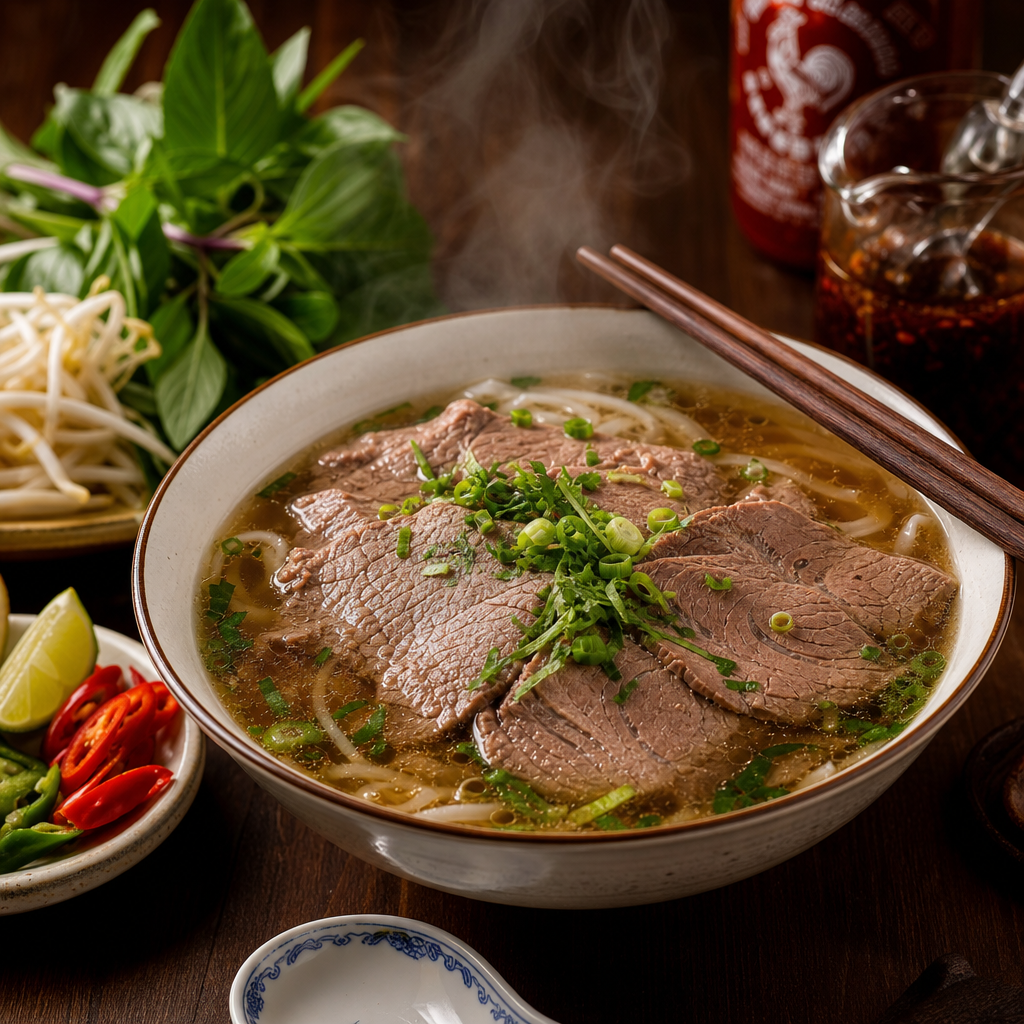
Pho — Vietnam's beloved noodle soup — is one of the most naturally halal-adaptable dishes in any world cuisine. Unlike ramen, which traditionally depends on pork bones and often pork chashu, authentic pho is built entirely on beef or chicken. A bowl of pho bo (beef pho) or pho ga (chicken pho) consists of rice noodles, a long-simmered bone broth, sliced meat, and a plate of fresh herbs: Thai basil, cilantro, bean sprouts, lime, and chili.
None of those core components is inherently haram. That is why the question "is pho halal?" really comes down to sourcing and preparation, not the recipe itself. Four things determine whether a specific bowl of pho is halal:
- The meat: the beef or chicken served in the bowl must come from animals slaughtered according to Islamic guidelines.
- The bones: pho broth simmers on bones for 12 hours or more, so the bones must be halal-sourced too — not just the sliced meat on top.
- The seasonings: the broth and sauces must be free of alcohol and pork-derived ingredients.
- The kitchen: preparation should avoid cross-contamination with pork dishes if the restaurant serves them.
In other words, pho from a restaurant that sources halal-certified meat and keeps a clean separation in the kitchen is halal-friendly. The same recipe made with conventionally slaughtered meat is not. If you are in the Ottawa area, our halal pho in Ottawa guide covers the local options in detail.
What Ingredients Can Make Pho Non-Halal?
Here is every major component of a bowl of pho and where it stands from a halal perspective. The pattern is clear: the plant-based ingredients are all halal, and the meat is the deciding factor.
| Ingredient | Halal Status | Notes |
|---|---|---|
| Rice noodles (banh pho) | Halal | Rice flour and water only — naturally halal |
| Beef / beef bones | Depends on source | Halal only if slaughtered according to Islamic guidelines |
| Chicken / chicken bones | Depends on source | Halal only if halal-certified |
| Pork (some side dishes) | Not halal | Never halal — confirm the kitchen separates it |
| Charred onion & ginger | Halal | Core broth aromatics — plant-based |
| Star anise, cinnamon, cloves, cardamom | Halal | Whole spices — naturally halal |
| Fish sauce (nuoc mam) | Generally halal | Fish and salt; considered halal by most scholars |
| Hoisin sauce | Generally halal | Plant-based; check brand for alcohol in ingredients |
| Cooking wine (rare, non-traditional) | Not halal | Not part of authentic pho — ask if unsure |
| Fresh herbs, lime, chili, bean sprouts | Halal | All plant-based garnishes are halal |
A note on fish sauce (nuoc mam): this cornerstone of Vietnamese cuisine is made by fermenting anchovies with salt. Most Islamic scholars consider it halal because fish is halal and any trace alcohol from fermentation is incidental, not added as an intoxicant. Diners who follow stricter interpretations can simply ask for their pho without added fish sauce — a well-made broth carries plenty of flavour on its own.
Is Beef Pho (Pho Bo) Halal?
Beef pho is halal when two conditions are met: the sliced beef served in the bowl is halal, and the bones the broth was simmered from are halal. The second condition is the one many diners forget to ask about — and it matters more than anything else, because the broth is the soul of the dish and simmers on those bones for half a day or longer.
A halal pho bo can include every traditional cut: thinly sliced rare beef (tai), well-done brisket (chin), flank (nam), tendon (gan), and tripe (sach) — all from halal-certified cattle. If you want to understand these cuts, our pho dac biet guide breaks down the "special combo" bowl that includes them all.
When evaluating a restaurant, ask directly: "Is your beef halal, and are the bones in your broth from halal-certified suppliers?" A restaurant that takes halal sourcing seriously will have a clear answer to both.
Is Chicken Pho (Pho Ga) Halal?
Chicken pho follows the same rule: it is halal when the chicken is halal-certified. Pho ga is often the easiest halal-friendly entry point into Vietnamese food because the entire dish revolves around one protein — the broth is made from chicken bones, the meat is poached chicken, and there is no beef or pork anywhere in the preparation.
Pho ga's broth is lighter and clearer than beef pho, seasoned with the same charred ginger and onion but a gentler hand on the spices. It is also slightly lower in calories, which is one reason it features in our guide to pho nutrition.
Halal-certified chicken is more widely available than halal beef in many cities, so restaurants that source halal often start with chicken. If a menu marks only some dishes as halal-friendly, chicken pho is frequently among them.
Can Pho Broth Contain Pork?
Authentic pho broth does not contain pork. This is a genuine structural advantage of pho over many other Asian noodle soups. Japanese tonkotsu ramen is defined by pork bone broth. Chinese wonton noodle soup often uses pork stock. But pho bo is beef through and through, and pho ga is pure chicken — pork has no place in either traditional recipe.
The realistic concern is not the pho itself but the rest of the menu. Many Vietnamese restaurants serve pork dishes alongside pho — grilled pork vermicelli, pork spring rolls, or traditional banh mi with pork cold cuts. In those kitchens, the questions worth asking are about separation: Are pork items prepared with separate equipment? Are the broths kept strictly apart?
For a broader comparison of how pho stacks up against other Asian soups — including which ones depend on pork — see our Asian noodle soups comparison.
Can Pho Contain Alcohol?
Traditional pho broth contains no alcohol. The recipe that has been passed down for over a century uses water, bones, charred onion and ginger, rock sugar, fish sauce, and a spice sachet of star anise, cinnamon, cloves, coriander seed, and black cardamom. Wine and cooking alcohol are simply not part of the tradition — Vietnamese cooks build depth through long simmering and charred aromatics instead.
Two caveats are worth knowing. First, a small number of fusion or modern restaurants may deglaze with wine or add mirin-style seasonings — this is rare, but if a menu reads "chef's modern take," it is fair to ask. Second, some commercial hoisin sauce brands list trace alcohol among their ingredients. Diners who avoid this can skip the hoisin entirely; many pho purists argue the broth tastes better without it anyway.
If you are curious what a traditional broth involves from start to finish, our guide to making pho at home walks through the entire authentic process — no alcohol required at any step.
Are Pho Noodles Halal?
Yes — pho noodles are naturally halal. Banh pho are flat rice noodles made from just two ingredients: rice flour and water. There are no animal products, no alcohol, no lard, and no wheat. They are also naturally gluten-free, which makes pho one of the few restaurant dishes that is simultaneously halal-adaptable and celiac-friendly.
The same is true of the rice vermicelli (bun) used in Vietnamese noodle bowls and the rice paper used for fresh spring rolls. Rice-based staples are one of the reasons Vietnamese cuisine adapts so well to halal diets compared to wheat-and-pork-heavy food traditions.
Is Banh Mi Halal?
Traditional banh mi is usually not halal. The classic banh mi dac biet is built on pork: cold cuts, grilled pork, and pork liver pâté layered into a crusty baguette. For halal diners, the traditional version is off the table.
The good news is that banh mi adapts beautifully. Halal-friendly versions swap the pork for grilled lemongrass chicken, halal beef, fried tofu, or egg — keeping the pickled daikon and carrot, cucumber, cilantro, and chili that make the sandwich sing. When ordering, confirm the protein is halal-sourced and ask whether the pâté and mayonnaise are pork-free (some kitchens use chicken pâté or skip it).
Read our complete banh mi guide for the full story of Vietnam's iconic sandwich, including every traditional and modern filling.
What Vietnamese Foods Are Commonly Halal-Friendly?
Vietnamese cuisine leans heavily on beef, chicken, seafood, rice, and fresh vegetables — which makes a large portion of the menu easy to prepare halal when the meat is properly sourced. These are the dishes halal diners most commonly enjoy:
Pho Bo (Beef Pho)
Halal when made with halal-certified beef and bones. The national dish of Vietnam, built on a 12+ hour simmered broth.
Pho Ga (Chicken Pho)
Often the simplest halal choice — a lighter broth made entirely from halal chicken and aromatics.
Bun (Vermicelli Bowls)
Rice vermicelli with grilled halal chicken or beef, fresh herbs, and nuoc cham dressing.
Goi Cuon (Fresh Spring Rolls)
Rice paper rolls with shrimp, chicken, or tofu — naturally halal-friendly when pork-free.
Halal Banh Mi
Vietnamese baguette sandwiches made with grilled halal chicken or beef instead of pork cold cuts.
Com (Rice Plates)
Broken rice or jasmine rice with grilled halal meats and vegetables.
For a wider tour of the cuisine — from noodle soups to rice plates to Vietnamese iced coffee — our Vietnamese food guide covers the dishes every newcomer should try.
How Can You Tell If a Vietnamese Restaurant Serves Halal Pho?
Because "halal-friendly" claims vary widely in rigour, it pays to know what to ask. Here is a practical checklist:
- Ask about the meat supplier. "Is your beef and chicken from halal-certified suppliers?" is the single most important question.
- Ask about the broth bones. The broth simmers on bones for 12+ hours — halal sliced meat on a non-halal broth defeats the purpose.
- Check the rest of the menu. If pork dishes are served, ask how the kitchen separates preparation and equipment.
- Look for consistency. Halal signage, website statements, and staff who answer confidently are good signs. Vague answers are not.
- Verify certification claims directly. If a restaurant claims formal halal certification, you can ask which body certified them and confirm with the certifier. Never assume — reputable restaurants welcome the question.
- Ask your community. Local Muslim communities usually know which Vietnamese restaurants have earned long-term trust.
A note on terminology: "halal-friendly" typically means a restaurant sources halal meat but may not hold formal certification for the entire premises (for example, if the restaurant serves alcohol to other guests or shares some equipment). Fully "halal-certified" means an accredited body has audited the whole operation. Both terms are used honestly by many restaurants — the key is understanding which one applies and deciding what meets your own standard.
For restaurant-specific information, see Pho By Night’s halal-friendly options and ask staff about current ingredients and preparation. The restaurant also serves pork dishes, so it is not exclusively halal.
Frequently Asked Questions About Halal Pho
Is pho halal?
Pho can be halal, but it is not automatically halal. Whether a bowl of pho is halal depends on the source of the meat, the bones used in the broth, the seasonings, and how the kitchen prevents cross-contamination. Pho made with halal-certified beef or chicken and a broth simmered from those same halal bones is halal-friendly; pho made with conventionally slaughtered meat or pork-based additions is not.
Can Muslims eat pho?
Yes, Muslims can eat pho when it is prepared with halal ingredients. The core components of pho — rice noodles, herbs, spices, and broth — contain nothing inherently haram. The key is confirming that the beef or chicken is halal-sourced and that the broth and kitchen practices avoid pork products and alcohol.
Does pho contain pork?
Traditional beef pho (pho bo) and chicken pho (pho ga) do not contain pork. The broth is made from beef or chicken bones, not pork bones. However, some restaurants serve pork-based side dishes or may use shared equipment, so diners with strict requirements should ask how the kitchen separates ingredients.
Does pho broth contain alcohol?
Authentic Vietnamese pho broth does not traditionally contain alcohol. It is made from bones, water, charred onion and ginger, and whole spices like star anise, cinnamon, and cloves. That said, a small number of modern or fusion recipes add wine, so it is always reasonable to ask the restaurant directly.
Is beef pho halal?
Beef pho is halal when the beef and the bones used for the broth come from cattle slaughtered according to Islamic guidelines. Because the broth simmers on the bones for many hours, the source of the bones matters just as much as the sliced beef served in the bowl.
Is chicken pho halal?
Chicken pho (pho ga) is halal when the chicken is halal-certified. Chicken pho is often the simplest halal-friendly choice because the broth is lighter and made entirely from chicken bones and aromatics, with no beef or pork involvement.
Are pho noodles halal?
Yes. Pho noodles (banh pho) are made from rice flour and water, both of which are naturally halal. They contain no animal products, alcohol, or wheat. The noodles are one part of pho you almost never need to worry about.
Is fish sauce halal?
Most Islamic scholars consider fish sauce halal because it is made from fish and salt, and any trace alcohol produced during fermentation is not added as an intoxicant. Some stricter interpretations differ, so diners who avoid all fermented products may ask for their pho without added fish sauce.
Is banh mi halal?
Traditional banh mi often contains pork (cold cuts and pâté), so many banh mi are not halal. However, halal-friendly versions made with grilled halal chicken or beef, tofu, or vegetables are increasingly common. Always check what protein is used and whether the bread and spreads avoid pork products.
Is Vietnamese food halal?
Vietnamese food is not halal by default, but Vietnamese cuisine is one of the easiest Asian cuisines to enjoy halal because so many dishes centre on beef, chicken, seafood, rice, and fresh vegetables rather than pork. Dishes like pho bo, pho ga, grilled chicken vermicelli bowls, and fresh spring rolls are simple to prepare halal when the meat is properly sourced.
How can I tell if a Vietnamese restaurant serves halal pho?
Ask three questions: where the meat comes from (look for halal-certified suppliers), what bones the broth is simmered from, and how the kitchen prevents cross-contamination with pork or alcohol. Restaurants that take halal seriously will answer confidently. You can also look for halal signage, check the restaurant's website, or ask your local Muslim community for recommendations.
Is pho at Pho By Night halal-friendly?
Pho By Night lists halal-friendly options and also serves pork dishes, so the restaurant is not exclusively halal. Ask staff to confirm current ingredients and preparation for a specific dish.
Share This Guide
Related Articles
Halal Pho in Ottawa
Where to find halal-friendly pho, banh mi, and vermicelli bowls in Ottawa
Is Pho Healthy?
Complete nutrition guide — calories, bone broth benefits, and more
What Is Pho Dac Biet?
The special combo pho — all five beef cuts explained
The Ultimate Guide to Pho
History, regional styles, and everything in one place
Banh Mi: The Complete Guide
Vietnam's iconic sandwich, from classic to halal-friendly versions
Vietnamese Food Guide
Every essential Vietnamese dish explained for newcomers