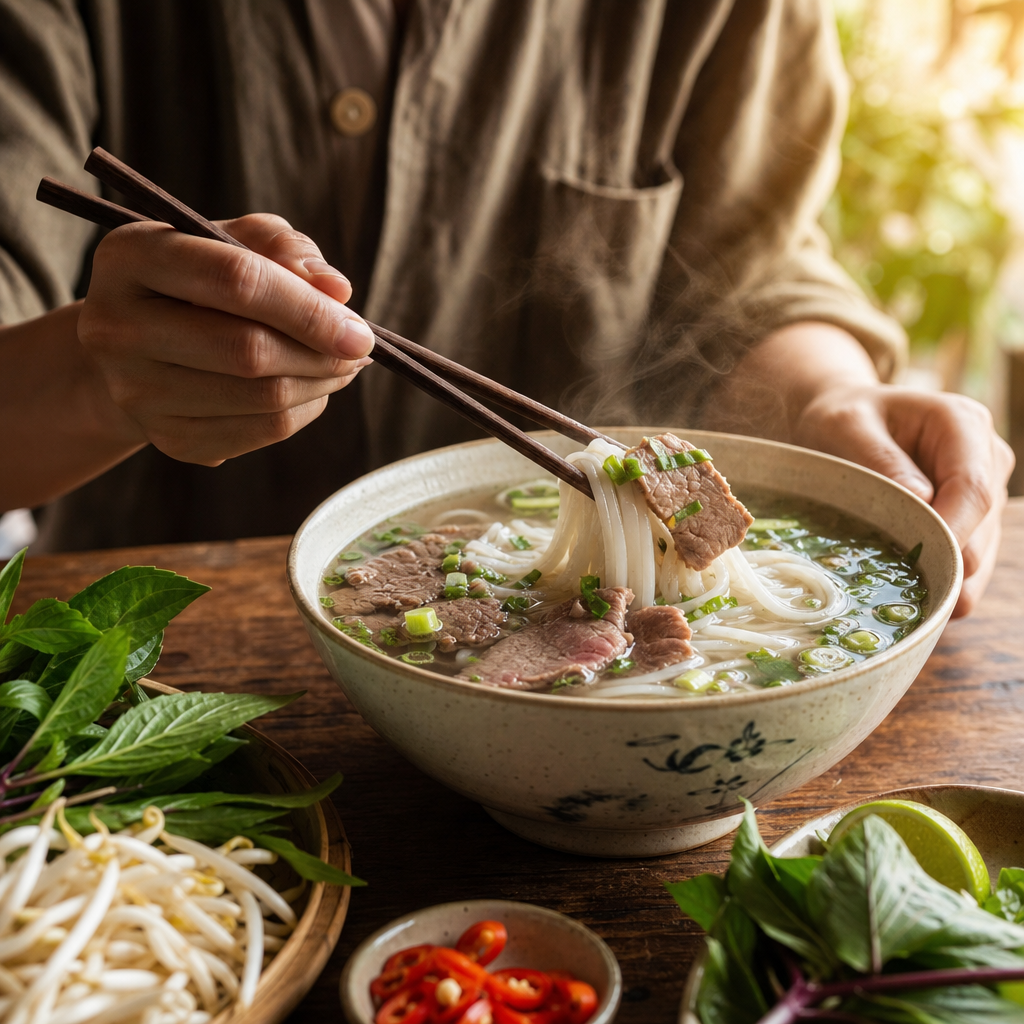
What Does Pho Taste Like?
If you have never tried pho (pronounced "fuh"), the simplest way to describe it is this: imagine a rich, comforting beef or chicken soup, then add the warm, faintly festive aroma of baking spices like star anise and cinnamon, and finish it with fresh herbs and a squeeze of lime. The result is savoury and satisfying but clean and refreshing — a soup you can eat a full bowl of without ever feeling weighed down.
The defining characteristic of pho is its broth. Unlike a heavy, creamy soup, pho broth is clear and light on the palate even though it carries enormous depth of flavour. That depth comes from simmering beef or chicken bones for many hours — at Pho By Night, our broths simmer for 12 hours or more — alongside charred ginger and onion, a small amount of rock sugar, fish sauce, and a fragrant spice sachet. Every one of those elements contributes a note, and the finished broth tastes complete: savoury first, gently sweet underneath, and aromatic throughout.
Pho is also famously customisable. The bowl arrives with a plate of fresh herbs and garnishes on the side, plus bottles of hoisin and sriracha on the table. That means the pho you taste is partly the pho you build — a big part of why it appeals to such a wide range of palates. New to the dish entirely? Our Pho 101 introduction covers the basics before your first bowl.
What Are the Different Flavors in a Bowl of Pho?
The reason pho tastes so layered is that it is built from five distinct flavour components, each doing its own job. Understanding them helps you taste the dish the way a Vietnamese cook intends it — and helps you tweak your bowl if you want to.
The Broth
The foundation — savoury, gently sweet, and clean, built from bones simmered for 12+ hours. This is the flavour everything else sits on.
The Spice Aromatics
Star anise, cinnamon, cloves, coriander seed, and cardamom give pho its warm, faintly festive perfume — like baking spices, but savoury.
The Meat
Silky rare beef, tender brisket, or poached chicken adds richness and a mild meatiness that soaks up the broth.
The Herbs
Thai basil, cilantro, and sawtooth herb bring brightness and freshness; bean sprouts add a cool, crunchy contrast.
The Condiments
Lime, chili, hoisin, and sriracha let you dial the sour, spicy, and sweet notes up or down to taste, bite by bite.
When these layers come together, no single one dominates. The broth carries the meal, the spices perfume it, the meat enriches it, the herbs brighten it, and the condiments let you fine-tune it. For a deeper look at the aromatics and how they are built, our ultimate guide to pho covers the recipe and regional styles in full.
What Does the Pho Broth Taste Like?
The broth is where pho lives or dies, so it deserves its own answer. A great pho broth tastes savoury and rounded, with a clean beefy or chicken-y backbone, a warm undertone of star anise and cinnamon, and a whisper of sweetness that keeps it from ever tasting flat. Crucially, it tastes light. You can sip spoonful after spoonful without the heaviness you get from richer soups, which is why many people find pho both comforting and re-energising.
This lightness is the biggest difference between pho and ramen. Ramen broth is often intentionally rich and opaque — think creamy pork-bone tonkotsu or deeply salty miso and soy. Pho broth, by contrast, is clear and spice-forward. Both are delicious, but they occupy opposite ends of the spectrum: ramen is bold and heavy, pho is aromatic and refreshing. We break the two down side by side in our pho vs ramen comparison.
Beef pho (pho bo) tastes deeper and more robust, while chicken pho (pho ga) tastes lighter, cleaner, and more delicate. If you are curious what actually goes into the pot to create these flavours, our explainer on what pho soup is made of walks through every ingredient.
Does Pho Taste Fishy?
This is one of the most common worries from first-timers, and the answer is reassuring: no, well-made pho does not taste fishy. Pho is seasoned with fish sauce (nuoc mam), a fermented anchovy sauce that is a cornerstone of Vietnamese cooking — but it is used in small, measured amounts. Its role is to add savoury depth and salinity, the same umami backbone that soy sauce lends to other cuisines. In a properly balanced broth, you taste roundness and richness, not fish.
Fish sauce works a little like an anchovy in a pasta sauce or Worcestershire in a gravy: it disappears into the background and makes everything else taste more complete. If a bowl of pho ever does taste noticeably fishy, it usually means the broth was over-seasoned or the fish sauce was of low quality — not that fishiness is the intended flavour.
A related concern is MSG. Some kitchens use it, some do not, and a long-simmered bone broth develops plenty of natural savouriness on its own. If it matters to you, it is perfectly fine to ask — we cover the topic honestly in our article on whether pho has MSG.
What Is the Texture of Pho Like?
Taste is only half of the pho experience — texture is the other half. The flat rice noodles (banh pho) are soft, smooth, and slightly slippery, with a gentle bounce that makes them satisfying to slurp. They soak up the broth without turning mushy when eaten fresh, which is why pho is best enjoyed as soon as it arrives. If you want to know why these noodles are used instead of wheat noodles, our guide to the best noodles for pho explains it.
The meats each bring their own texture. In pho tai, thin slices of rare beef are laid raw over the noodles and cook in seconds when the near-boiling broth is poured over them — they turn silky and just-tender, tasting fresh and delicate rather than seared. Well-done brisket (chin) is firmer and pleasantly chewy, flank (nam) has a bit more bite, tendon (gan) is soft and gelatinous, and tripe (sach) is springy. Chicken in pho ga is tender and poached-soft. Then the raw garnishes add contrast: crunchy bean sprouts, crisp herbs, and a burst of sour lime.
First time eating it? Chopsticks in one hand, spoon in the other is the traditional method. Our how to eat pho guide walks through the mechanics so you can focus on enjoying the flavours.
How Do Toppings and Garnishes Change the Flavor?
The plate of garnishes that arrives beside your bowl is not decoration — it is your flavour toolkit, and it is what lets two people eating the same pho end up with two very different bowls. Here is how each addition shifts the taste:
- Thai basil: tear the leaves in and they add a sweet, slightly anise, peppery brightness that echoes the broth's spices.
- Bean sprouts: add cool crunch and a fresh, grassy contrast to the warm broth; dunk them in to soften or leave them crisp.
- Lime: a squeeze brightens everything, cutting through the richness with a clean sourness — start with half a wedge and build up.
- Hoisin sauce: sweet, thick, and slightly savoury; best used sparingly, or in a side dish to dip your meat rather than poured into the broth.
- Sriracha and fresh chili: add heat and a garlicky kick for those who want spice, without changing the base flavour for everyone else.
The advice most experienced pho eaters give is the same: taste the broth plain first. A good broth is a finished dish on its own, and you will appreciate the layers more before you start adjusting. Then add herbs, lime, and a touch of sauce a little at a time until the bowl tastes right to you.
For a complete rundown of every garnish and how the classic condiments are traditionally used, see our pho toppings and garnishes guide.
How Does Pho Taste Compared to Other Noodle Soups?
One of the easiest ways to understand a new flavour is to compare it to something familiar. Here is how pho's flavour profile stacks up against three well-known soups from around the world.
| Soup | Broth Base | Flavor Profile | Key Aromatics | Heat | Body |
|---|---|---|---|---|---|
| Pho (Vietnamese) | Beef or chicken bone broth | Savoury, gently sweet, aromatic, clean | Warm spices (star anise, cinnamon) | Mild — add chili to taste | Light and clear |
| Ramen (Japanese) | Pork, chicken, miso, or soy | Rich, salty, deeply umami | Garlic, sesame, sometimes chili | Mild to spicy by style | Rich, often opaque |
| Tom Yum (Thai) | Shrimp or chicken stock | Hot, sour, herbal, punchy | Lemongrass, galangal, kaffir lime, chili | Hot and tangy | Light but intense |
| Chicken Noodle (Western) | Chicken stock | Mild, comforting, savoury | Herbs like thyme, parsley, black pepper | None | Light and simple |
The short version: if you love the comfort of chicken noodle soup but want more aroma and depth, pho will feel like an upgrade rather than a leap. For a broader tour of how these soups differ in ingredients and history, read our Asian noodle soups comparison.
What Pho Should a First-Timer Order?
A pho menu can look intimidating on your first visit, but three orders cover most newcomers beautifully. Choose based on how bold you want the flavour to be.
Pho Ga (Chicken)
The gentlest introduction. A light, clear, delicate broth with tender poached chicken — familiar and easy to love on the first try.
Pho Tai (Rare Beef)
The classic beef bowl. A deeper, more robust broth with silky slices of rare beef that cook in the hot broth as it is served.
Pho Dac Biet (Special)
The adventurous choice. A "special combo" with several beef cuts and textures in one bowl — best once you know you enjoy pho.
On the rare beef in pho tai: the thin slices are placed raw and cook almost instantly in the near-boiling broth, ending up just-cooked and tender. For the general population this is a safe, traditional preparation. If you are pregnant, elderly, very young, or immunocompromised, it is reasonable to simply ask for your beef well-done (chin) instead — most kitchens are happy to accommodate this, and the broth tastes just as good. When in doubt about any dietary concern, consult your doctor or a dietitian.
Want to understand the "special" bowl before you order it? Our pho dac biet guide explains each cut, and you can always browse our full menu to plan your first visit.
Frequently Asked Questions About What Pho Tastes Like
What does pho taste like?
Pho is usually savoury and aromatic, with a clear beef or chicken broth that may have gentle sweetness and warm spice notes. The exact flavour varies by recipe; fresh herbs and lime add brightness, while chili can add heat if you choose.
Is pho spicy?
Pho itself is not spicy. The base broth is warm and aromatic but mild, built on sweet spices rather than chili heat. Any spiciness comes from what you add at the table — fresh sliced chili, chili oil, or sriracha. This makes pho friendly for people who dislike heat, while still letting spice lovers customise their bowl.
Does pho taste fishy?
No, well-made pho does not taste fishy. Pho is seasoned with fish sauce, but the fish sauce is used in small amounts to add savoury depth (umami) and saltiness rather than a fishy flavour. In a good bowl you taste roundness and richness, not fish. If a broth tastes strongly fishy, it is usually a sign of over-seasoning.
Is pho broth sweet?
Pho broth has a gentle background sweetness, not a dessert-like sweetness. The subtle sweetness comes from long-simmered bones, charred onion, and a small amount of rock sugar, balanced against savoury fish sauce and salt. The result is a well-rounded broth that tastes complete — savoury first, with just enough sweetness to soften the edges.
What does pho smell like?
Pho has one of the most recognisable aromas in Vietnamese cooking: warm baking spices like star anise and cinnamon mingled with the smoky sweetness of charred ginger and onion, beef or chicken stock, and fresh herbs added at the table. Many people say the smell alone — comforting and slightly festive — is half the experience.
Does pho taste like ramen?
No. Pho and ramen are both noodle soups but taste quite different. Pho broth is lighter, clearer, and spice-forward with star anise and cinnamon. Ramen broth is usually richer, saltier, and more intense — often built on pork bones, miso, or soy. Pho tastes refreshing and aromatic; ramen tastes deep and umami-heavy.
Why does pho taste so good?
Pho tastes so good because of the slow-simmered broth. Simmering bones with charred aromatics and whole spices for many hours extracts collagen, minerals, and gentle sweetness while the spices bloom slowly. This produces a broth with real depth that no shortcut can replicate — layered, balanced, and satisfying without feeling heavy.
What is the first thing I taste in pho?
The first thing most people notice is the aroma of warm spices as the bowl arrives. On the first spoonful of broth you taste savoury beef or chicken richness, then the warmth of star anise and cinnamon, and finally a clean, slightly sweet finish. As you add herbs, lime, and sauces, the flavour keeps evolving bite by bite.
Does pho taste better with hoisin and sriracha?
That depends on your palate. Purists sip the broth plain to appreciate the clean, layered flavour, while many diners enjoy a small amount of hoisin for sweetness and sriracha for heat — usually in a side dish for dipping meat rather than dumped into the broth. Try the broth on its own first, then adjust. There is no wrong way to enjoy it.
What does rare beef pho (pho tai) taste like?
In pho tai, thin slices of raw beef are placed on top and cook in seconds as the near-boiling broth is poured over them. The beef turns tender and just-cooked, tasting fresh, silky, and mildly beefy rather than seared or charred. It absorbs the broth's flavour and adds a delicate meatiness to each spoonful.
Is pho an acquired taste?
Taste is personal, but pho's broth is often savoury and mild rather than strongly spicy. If the fresh herbs or condiments are unfamiliar, add them gradually and adjust the bowl to your preference.
What does pho taste like at Pho By Night?
At Pho By Night in Ottawa's ByWard Market, our broths are slow-simmered for 12+ hours from beef and chicken bones sourced from halal-certified suppliers, with charred ginger, onion, and whole spices. The result is a clean, aromatic, deeply savoury broth balanced with a touch of sweetness — the traditional flavour that has kept guests coming back since 2000.
Taste It for Yourself in Ottawa's ByWard Market
At Pho By Night, our broths are slow-simmered for 12+ hours from bones sourced from halal-certified suppliers — clean, aromatic, and deeply savoury. Come find out what pho really tastes like. We have served Ottawa since 2000.
Share This Guide
Related Articles
Pho 101: A Beginner's Introduction
Everything a first-timer needs to know before their first bowl
How to Eat Pho
Chopsticks, spoon, garnishes, and the traditional way to enjoy it
Pho vs Ramen
How the two most famous noodle soups differ in flavour and broth
Pho Toppings & Garnishes Guide
Every herb, sauce, and garnish and how it changes the taste
What Is Pho Dac Biet?
The special combo bowl and all its beef cuts explained
The Ultimate Guide to Pho
History, regional styles, and the full recipe in one place