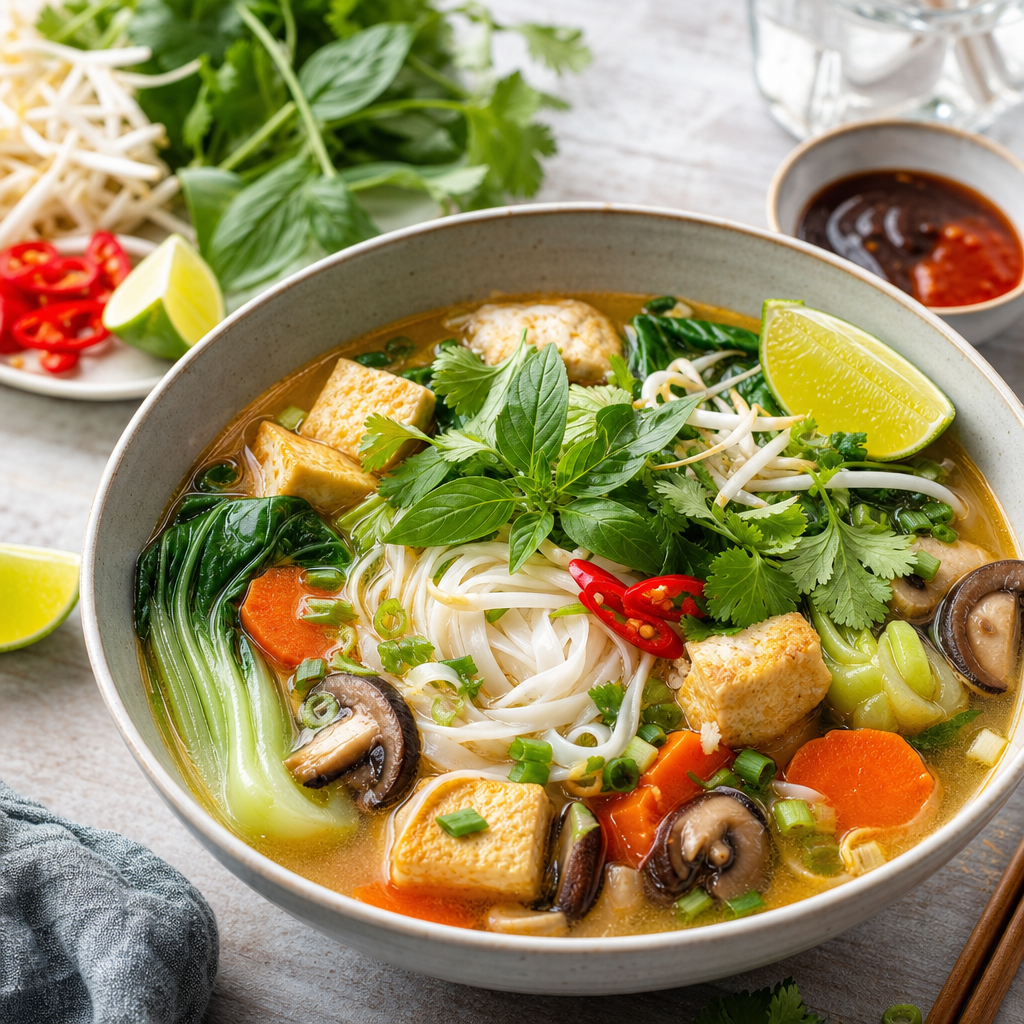
Is Pho Vegan or Vegetarian?
In its classic form, pho is neither vegan nor vegetarian. The dish most people picture — pho bo (beef pho) or pho ga (chicken pho) — is defined by a bone broth simmered for 12 hours or more, and it is usually seasoned with fish sauce. Even the sliced meat aside, the broth itself is an animal product from the first pot of bones.
This is the single most important thing for plant-based diners to understand: you cannot make a bowl of standard pho vegan simply by leaving out the beef. The soul of the dish is the broth, and a meat-based broth stays meat-based whether or not there are slices of protein floating in it.
The good news is that Vietnam has a genuine plant-based pho with centuries of tradition behind it: pho chay. It is not a compromise or an afterthought — it is a complete dish with its own broth, seasonings, and toppings. The rest of this guide explains what pho chay is, how to spot the hidden animal ingredients that trip up vegans, and how to order confidently. For the wider picture of the dish, our ultimate guide to pho covers its history and styles.
What Is Pho Chay and the Buddhist Tradition Behind It?
Pho chay is the vegetarian and vegan version of pho. The word "chay" means "vegetarian" or "fasting" food in Vietnamese, and it points directly to the dish's origins in Vietnamese Buddhist cooking. In the Mahayana Buddhist tradition that shapes much of Vietnamese religious life, many practitioners eat an entirely plant-based diet on certain lunar days — and some monks and devout followers eat chay all year round.
Out of that tradition grew a sophisticated cuisine devoted to recreating beloved dishes without any animal products. Temple kitchens became famous for their skill at coaxing deep, savoury flavour from vegetables, mushrooms, soy, and spices. Pho chay is part of that lineage: a version of the national dish that any observant Buddhist — or any vegan — can eat with confidence.
Because chay cooking is a serious, respected discipline in Vietnam rather than a niche trend, well-made pho chay tastes like pho, not like pho with something missing. The aromatics and spice profile are the same; only the base changes. To understand how much the broth defines the whole dish, see what pho soup is actually made of.
Is Regular Pho Vegetarian If I Order It Without Meat?
No — and this is where plant-based diners are most often caught out. At the majority of Vietnamese restaurants, the standard broth is simmered from beef or chicken bones, so ordering "pho with no meat" still gives you a bowl of animal-based soup. Some kitchens will happily leave out the sliced beef, but they cannot change the broth that has been cooking since the morning.
Fish sauce is the second trap. Even a "vegetable pho" may be finished with nuoc mam, the fermented anchovy sauce that seasons so much Vietnamese cooking. A bowl can look entirely plant-based and still contain fish. That is why the reliable move is to order pho chay by name — a dish the kitchen has built to be meat-free from the ground up — rather than asking for modifications to a meat recipe.
One more nuance: "vegetarian" and "vegan" are not identical. A vegetarian bowl might include egg noodles or a dairy-adjacent garnish; a vegan bowl excludes all animal products. If you are strictly vegan, name it. For more on the sneaky animal ingredients worth watching, our guide to Vietnamese food allergies and dining is a useful companion.
What Goes Into a Vegan Pho Broth?
A great pho chay broth proves you don't need bones to make a soulful pho. It starts with the same signature move as classic pho: charring onion and ginger over an open flame until they blacken and sweeten, then adding them to the pot to give the broth its deep, smoky-savoury backbone. From there the spice sachet is identical — star anise, cinnamon, cloves, coriander seed, and cardamom steeped until fragrant.
What replaces the meaty richness of bone broth is a careful layering of vegetables:
- Mushrooms — shiitake, king oyster, or straw mushrooms add glutamate-rich umami that mimics the savoury depth of meat.
- Daikon radish — simmered whole, it lends a clean, gentle sweetness and body to the broth.
- Apple or Asian pear — a traditional trick that adds natural sweetness without refined sugar.
- Carrot, corn, and onion — everyday vegetables that build a rounded, sweet-savoury base.
For seasoning, cooks reach for salt, soy sauce, mushroom seasoning, rock sugar, and vegan fish sauce made from pineapple, seaweed, or fermented soy — never anchovy nuoc mam. The result is lighter and cleaner than beef broth, but unmistakably pho. If you want to try it yourself, adapt the vegetable-broth approach from our guide to making pho at home.
What Are the Best Vegan Protein Options for Pho?
A satisfying bowl of pho chay isn't just broth and noodles — it needs texture and protein to stand in for the sliced meat. These are the plant proteins you will most often find, and the ones worth requesting when you build your own bowl:
Tofu
Fried tofu adds a golden, chewy bite and soaks up the aromatic broth; silken or braised tofu gives a softer texture.
Mushrooms
King oyster, shiitake, enoki, and straw mushrooms bring meaty texture and deep umami — many cooks add them to the broth itself.
Seitan & Mock Meats
Wheat-gluten seitan and soy-based mock 'beef' echo the chew of traditional slices, though they are not gluten-free.
Vegetables
Bok choy, broccoli, carrot, and daikon round out the bowl with colour, crunch, and nutrients alongside the protein.
Tofu and mushrooms are the workhorses of pho chay — tofu for substance, mushrooms for that meaty umami. If you keep the bowl gluten-free, note that seitan is wheat-based and off-limits, and mock meats vary. Round everything out with the classic pho garnish plate of Thai basil, bean sprouts, lime, and chili; our pho toppings and garnishes guide shows how to use them.
What Other Vietnamese Dishes Are Vegan-Friendly?
Pho chay is a wonderful starting point, but Vietnamese cuisine offers plenty more for plant-based diners — thanks in large part to the same Buddhist chay tradition. When ordering any of these, apply the same rule: confirm the dish skips fish sauce, shrimp paste, chicken stock, and egg.
- Fresh spring rolls (goi cuon chay) — rice-paper rolls with fried or fresh tofu, vermicelli, lettuce, and herbs. Ask for a hoisin-peanut or soy dip rather than a fish-sauce-based nuoc cham.
- Vermicelli bowls (bun chay) — rice noodles topped with fried tofu, sautéed vegetables, herbs, and crushed peanuts, dressed with a vegan sauce.
- Tofu rice plates and stir-fries — steamed rice with tofu and vegetables, or a vegetable stir-fry seasoned with soy and mushroom sauce.
- Vietnamese iced coffee, made vegan — swap the sweetened condensed milk for a plant-based version or take it black over ice (ca phe den da).
For an at-home project, our Vietnamese spring rolls guide is easy to make fully vegan, and the wider Vietnamese food guide for Ottawa flags which dishes adapt best to a plant-based diet.
If you are dining with us, you can browse Pho By Night's vegan and vegetarian options before you visit, or see the full menu to plan a meal for a mixed group.
How Do You Order Vegan at a Vietnamese Restaurant?
A little know-how goes a long way. Most Vietnamese kitchens are very familiar with vegetarian requests — the chay tradition is part of the culture — so clear, specific questions tend to get you exactly what you want. Here is a practical checklist:
- Ask for pho chay by name. Look for a "chay" (vegetarian) section on the menu rather than modifying a meat dish.
- Confirm the broth is vegetable-based. A meat-broth pho with the beef removed is still not vegan.
- Ask about fish sauce and shrimp paste. These are the most common hidden animal ingredients in "vegetable" dishes.
- Check for chicken stock powder. Some kitchens season otherwise-vegetable broths with bouillon — worth confirming.
- Request rice noodles. They are vegan and gluten-free, unlike egg noodles.
- Ask about dipping sauces. Nuoc cham usually contains fish sauce; request a soy or hoisin-peanut alternative.
At Pho By Night in Ottawa's ByWard Market, we offer vegan and vegetarian options and are happy to talk through broth, seasonings, and preparation. Because our kitchen also cooks with meat and fish sauce, guests with strict plant-based needs are always welcome to ask — we would rather answer every question than leave you guessing.
Frequently Asked Questions About Vegan Pho
Is pho vegan or vegetarian?
Traditional pho is neither vegan nor vegetarian — it is built on a beef or chicken bone broth and usually seasoned with fish sauce. The vegan version is a distinct dish called pho chay, made with a vegetable and mushroom broth and plant proteins like tofu. If you want vegan pho, you need to order pho chay specifically, not standard pho with the meat left out.
What is pho chay?
Pho chay is Vietnam's vegetarian and vegan version of pho, rooted in Vietnamese Buddhist temple cooking. 'Chay' means 'vegetarian' or 'fasting' food. Instead of bone broth, pho chay uses a clear vegetable broth built from charred onion and ginger, the same warm spices as classic pho, plus mushrooms, daikon, and fruit for natural sweetness, topped with tofu and vegetables.
Can I just order regular pho without meat to make it vegan?
Usually not. At most restaurants the broth itself is simmered from beef or chicken bones and seasoned with fish sauce, so removing the meat still leaves an animal-based soup. A truly vegan bowl requires a separate vegetable broth. Always ask specifically for pho chay or a vegetable-broth pho rather than assuming a 'no meat' order is plant-based.
Does vegan pho have fish sauce?
Authentic pho chay does not use fish sauce. Buddhist and vegan cooks season the broth with salt, soy sauce or vegan fish sauce (made from pineapple, seaweed, or fermented soy), mushroom seasoning, and rock sugar instead. Since fish sauce is a very common hidden ingredient, vegans should confirm the broth and any dipping sauces are made without it.
What protein is in vegan pho?
The most common plant proteins in vegan pho are tofu (fried, silken, or braised), a variety of mushrooms such as king oyster, shiitake, and enoki, and sometimes seitan or soy-based mock meats. Mushrooms also add a savoury, meaty depth to the broth itself, while tofu soaks up the aromatic soup and adds substance to the bowl.
Are pho noodles vegan?
Yes. The flat rice noodles used in pho (banh pho) are made from rice flour and water only, so they are vegan and naturally gluten-free. The care point is egg noodles: some noodle soups use wheat-and-egg noodles, which are not vegan. Confirm your bowl uses rice noodles if you avoid eggs, gluten, or both.
Is vegan pho gluten-free?
It can be, but not automatically. Rice noodles are naturally gluten-free, but soy sauce, hoisin, and some vegan 'fish sauce' or mock-meat products contain wheat. If you are managing celiac disease or gluten sensitivity, ask about every seasoning and consider tamari-based alternatives. When in doubt, request the broth plain and add your own gluten-free sauces.
What does vegan pho broth taste like?
A good pho chay broth is aromatic, gently sweet, and warming, with the same star anise, cinnamon, and clove backbone as classic pho. It tends to be lighter and cleaner than beef broth, with earthy umami from mushrooms and natural sweetness from daikon, onion, and fruit like apple or pear. It is fragrant rather than rich, and deeply comforting.
Is vegan pho healthy?
Vegan pho can be a nourishing, vegetable-forward meal that is lower in saturated fat than meat pho, with fibre from vegetables and protein from tofu. Sodium can still be high, as with all pho. Nutritional needs vary from person to person, so treat this as general guidance and consult a doctor or registered dietitian for advice specific to you.
What other Vietnamese dishes are vegan-friendly?
Beyond pho chay, look for fresh spring rolls (goi cuon) filled with tofu and herbs, vermicelli bowls (bun chay) with fried tofu and vegetables, tofu rice plates, and many vegetable stir-fries. Vietnamese Buddhist cuisine has a rich tradition of mock-meat dishes. Just confirm dishes skip fish sauce, shrimp paste, and egg, which appear in many 'default' recipes.
How do I order vegan at a Vietnamese restaurant?
Ask for pho chay or a dish from the 'chay' (vegetarian) section, then confirm the broth is vegetable-based, and that no fish sauce, shrimp paste, chicken stock powder, or egg is used. Request rice noodles, and check that dipping sauces are plant-based. Polite, specific questions get the best results — most Vietnamese kitchens are used to vegetarian requests.
Does Pho By Night have vegan options?
Yes. Pho By Night in Ottawa's ByWard Market offers vegan and vegetarian options — you can see them on our vegan menu page. As with any kitchen that also cooks with meat and fish sauce, guests with strict plant-based requirements are welcome to ask our staff about broth, seasonings, and preparation so we can guide you to the right dish.
Vegan & Vegetarian Pho in Ottawa's ByWard Market
Pho By Night offers vegan and vegetarian options built on aromatic, plant-forward flavour — served in the heart of the ByWard Market since 2000. Browse our vegan menu, then dine in or order online.
Share This Guide
Related Articles
Vegan Menu at Pho By Night
Browse our plant-based and vegetarian options in Ottawa
Vietnamese Food Guide
Every essential Vietnamese dish, including vegan-friendly picks
The Ultimate Guide to Pho
History, regional styles, and everything in one place
Vietnamese Spring Rolls Guide
Fresh rolls you can easily make fully vegan at home
Best Noodles for Pho
Rice vs egg noodles — which are vegan and gluten-free
Is Pho Healthy?
Complete nutrition guide — calories, broth, and more