Is Pho Healthier Than Ramen?
A side-by-side look at calories, sodium, fat, and nutrition
Discover why Vietnamese pho is often considered the lighter, healthier noodle soup
Pho vs Ramen: Which Noodle Soup Is Healthier?
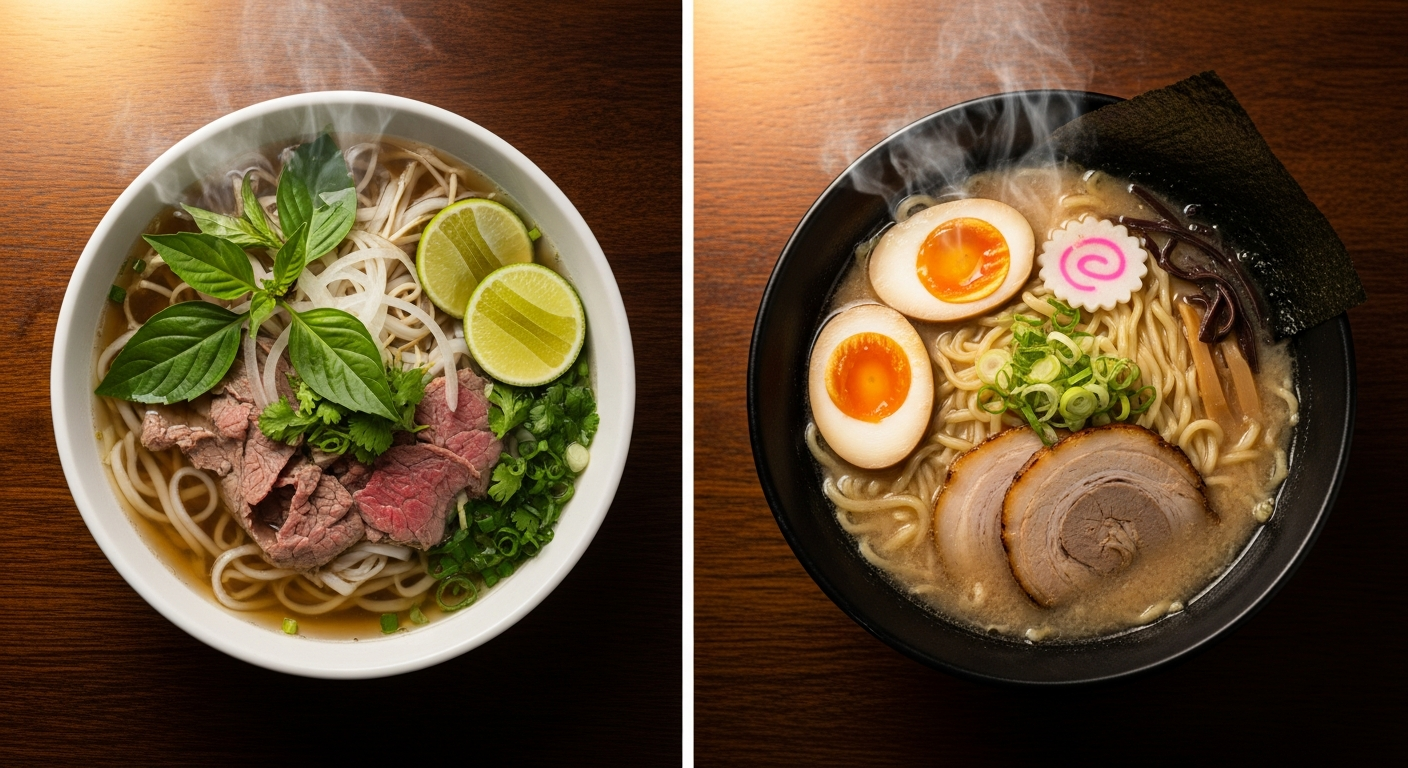
Pho and ramen are two of the most popular noodle soups in the world, but when it comes to nutrition and health, they are quite different. Vietnamese pho is known for its clear, aromatic broth, fresh herbs, and lighter flavour profile. Japanese ramen, by contrast, often features a rich, creamy broth made from pork bones, butter, or miso, with heartier toppings and wheat-based noodles.
If you are watching your calorie intake, managing sodium, or simply looking for a lighter and more refreshing noodle soup, pho is often the better choice. A typical bowl of Vietnamese pho contains 350 to 500 calories with a clear broth that is low in fat. Ramen, especially popular styles like tonkotsu or miso ramen, can easily exceed 600 to 800 calories per bowl due to its emulsified fatty broth and heavier toppings.
At Pho By Night in Ottawa's ByWard Market, our pho broth is slow-simmered for over 12 hours using real beef bones and traditional Vietnamese spices — no instant bases, no added MSG, and no shortcuts. This traditional preparation results in a broth that is naturally rich in flavour without being heavy in fat or sodium. Paired with fresh Thai basil, bean sprouts, lime, and cilantro, our pho offers a balanced, nourishing meal that is both satisfying and health-conscious.
That said, both pho and ramen have their place. Ramen is a comforting, indulgent bowl that delivers deep umami satisfaction, and many people enjoy it for exactly that richness. The goal of this comparison is not to declare one the ultimate winner, but to help you make an informed choice based on your dietary preferences and health goals.
Nutrition Comparison: Pho vs Ramen
Here is how a typical bowl of Vietnamese pho stacks up against a bowl of Japanese ramen in key nutritional categories.
Pho
350-500
Calories (per bowl)
Ramen
500-800+
Pho
5-10g
Fat
Ramen
15-30g
Pho
1,000-1,500mg
Sodium
Ramen
1,500-2,500mg
Pho
25-35g
Protein
Ramen
20-35g
Pho
Served fresh
Fresh Herbs
Ramen
Minimal
Pho
Rice (gluten-free)
Noodle Type
Ramen
Wheat (contains gluten)
Why Pho Is Generally the Lighter Choice
Clear, Low-Fat Broth
Pho broth is gently simmered and carefully skimmed to remove excess fat, resulting in a clear soup that is rich in flavour without being heavy. Ramen broth is often boiled aggressively to emulsify fat and collagen.
Fresh Herbs and Vegetables
Every bowl of pho is served with a plate of fresh Thai basil, bean sprouts, lime, and cilantro. These add vitamins, antioxidants, and brightness without extra calories.
Lower Sodium Content
Authentic pho broth made from real bones and spices naturally contains less sodium than ramen, which often relies on soy sauce, miso paste, or concentrated tare for its flavour.
Gluten-Free Rice Noodles
Pho uses rice noodles that are naturally gluten-free, making it accessible for guests with gluten sensitivity. Ramen noodles are made from wheat flour and contain gluten.
Worth noting: Both pho and ramen can be made healthier or less healthy depending on how they are prepared. At Pho By Night, we use traditional slow-cooking methods with real bones and fresh spices to deliver a broth that is naturally flavourful and light.
Frequently Asked Questions
Common questions about the health differences between pho and ramen.