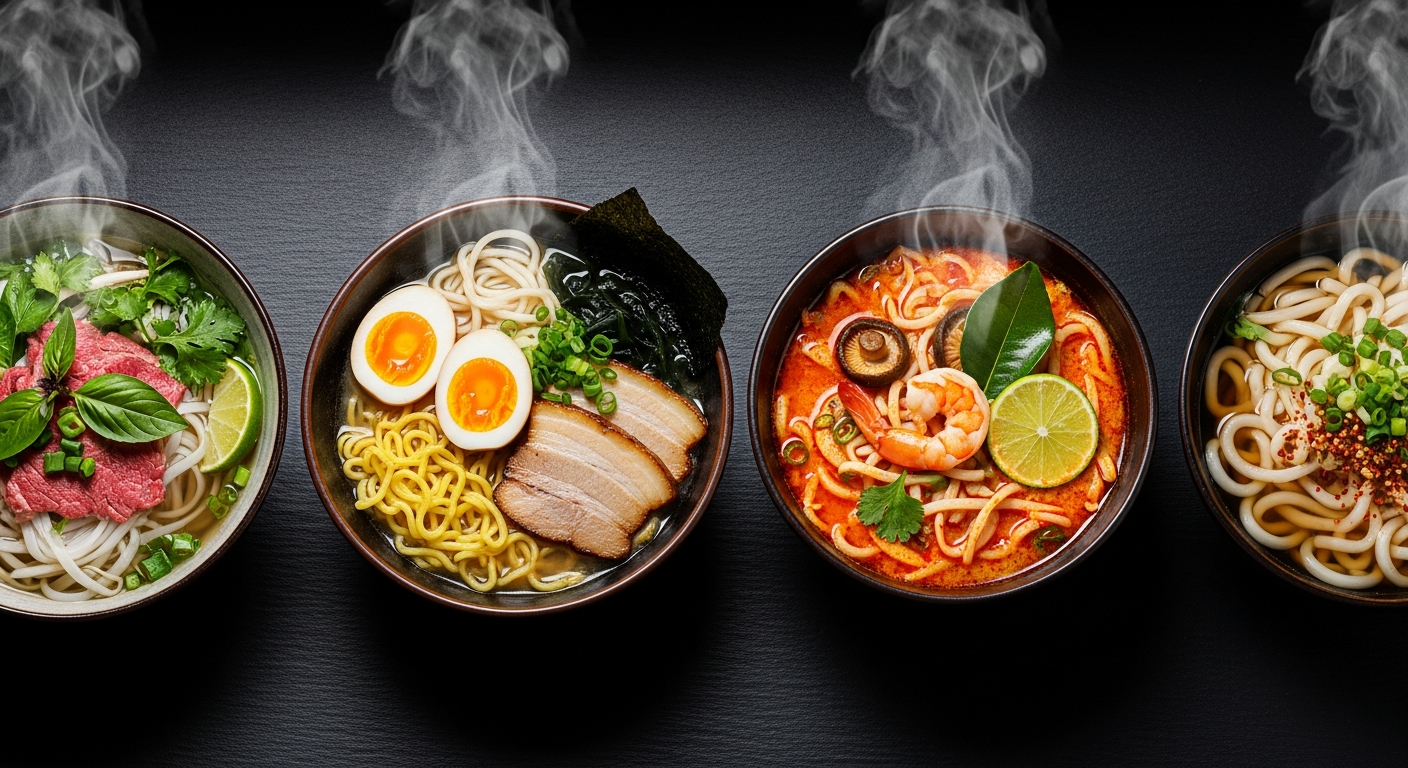
Asian noodle soups compared — pho, ramen, tom yum, udon side by side
The Asian Noodle Soup Hub

Asian Noodle Soups Compared

Pho, ramen, tom yum, udon, bun bo hue, and wonton — what makes each one different.

The complete comparison from a Vietnamese restaurant family.

·By Pho By Night Ottawa

One Continent, Six Iconic Soups

Asian noodle soups are not a single category — they are a vast culinary universe. Vietnamese pho, Japanese ramen, Thai tom yum, Japanese udon, Vietnamese bun bo hue, and Cantonese wonton noodle soup are all loved around the world, but they come from completely different culinary philosophies.

If you have ever wondered which one to order, which one is healthier, or what actually makes ramen different from pho, this guide is the answer. We compare all six side-by-side: broth philosophy, noodle type, protein, spice level, calorie range, and which one is right for any occasion.

We are a Vietnamese restaurant family — Pho By Night in Ottawa's ByWard Market since 2000. We obviously have a favourite, but we love and respect all six of these soups. Here is the honest comparison.

The Six Major Asian Noodle Soups

Each soup has its own broth philosophy, noodle, protein, and ideal occasion.

Pho

Vietnamese Classic
From Vietnam
Broth: Clear bone broth, simmered 12+ hours with star anise, cinnamon, cloves, ginger, charred onion. Light, aromatic, gently warming.
Noodles: Flat rice noodles (banh pho). Gluten-free, smooth, slightly translucent.
Protein: Beef (rare, brisket, tendon, meatballs) or chicken. Halal-certified options available at some Vietnamese restaurants.
Flavour: Subtle, layered, aromatic. Spice and acidity added at the table by the diner.
Spice: None by default
Calories: 350-550 per bowl

Ramen

Japanese
From Japan
Broth: Rich, often opaque. Common types: tonkotsu (pork bone), shoyu (soy), miso, shio (salt). Boiled vigorously to emulsify fat into broth.
Noodles: Wheat noodles with kansui alkaline agent. Yellow, chewy, springy. Not gluten-free.
Protein: Chashu pork, soft-boiled egg, sometimes chicken or seafood. Few halal options.
Flavour: Bold, umami-forward, deeply savoury. Garnished in the kitchen, not the table.
Spice: Mild to moderate (tantanmen and spicy miso are hotter)
Calories: 500-900+ per bowl (tonkotsu is highest)

Tom Yum

Thai
From Thailand
Broth: Hot and sour broth with lemongrass, galangal, kaffir lime leaves, fresh chili, and lime juice. Bold, tangy, intensely herbal.
Noodles: Traditionally none. Sometimes served with rice vermicelli or glass noodles.
Protein: Shrimp (tom yum goong), chicken (tom yum gai), or mixed seafood.
Flavour: Sour, spicy, herbal. Hits you immediately. Aromatic from cooked herbs.
Spice: High (chili paste and fresh chilies are core ingredients)
Calories: 150-300 per bowl

Udon

Japanese
From Japan
Broth: Light dashi broth (kombu kelp + bonito flakes), seasoned with soy sauce or mirin. Subtle, savoury, clean.
Noodles: Thick, chewy wheat noodles. The thickest of all the noodles in this list.
Protein: Tempura, kakiage, beef, tofu, or simply scallions. Often served plain.
Flavour: Mild, comforting, focused on noodle texture more than broth complexity.
Spice: None by default
Calories: 300-500 per bowl

Bun Bo Hue

Vietnamese
From Vietnam (central)
Broth: Beef bone broth with lemongrass, shrimp paste, and chili oil. Spicy, complex, bolder than pho.
Noodles: Round rice noodles — thicker than pho noodles. Gluten-free.
Protein: Beef shank, pork knuckle, congealed pork blood, lemongrass meatballs.
Flavour: Spicy, lemongrass-forward, deeply umami. Vietnam's bolder cousin to pho.
Spice: Moderate to high
Calories: 450-650 per bowl

Wonton Noodle Soup

Cantonese
From China (Cantonese)
Broth: Light chicken or pork stock with dried flounder for depth. Clean, savoury, subtle.
Noodles: Thin egg noodles — bouncy and slightly springy.
Protein: Pork-and-shrimp wontons. Sometimes char siu or vegetables.
Flavour: Delicate, clean, focused on the wontons and noodle texture.
Spice: None by default
Calories: 300-450 per bowl

Which Asian Noodle Soup Should You Order?

When you are sick

Pho

Light bone broth, ginger, and gentle warmth — easy on the stomach.

When you are hungover

Pho or Bun Bo Hue

Both rehydrate, restore electrolytes, and the spice clears the head.

On a cold winter night

Ramen (tonkotsu)

Rich, fatty, deeply warming. The most comfort per spoonful.

When you want low-calorie

Tom Yum

150-300 calories. Low fat, high flavour from herbs.

When you are dining halal

Pho (at certified halal restaurants)

Pho By Night Ottawa serves halal-certified beef and chicken pho.

When you are gluten-free

Pho or Bun Bo Hue

Both use rice noodles. Confirm gluten-free fish sauce with your restaurant.

When you want spice

Tom Yum or Bun Bo Hue

Both bring heat from chili. Add Korean ramyun for the spiciest option.

When you want simplicity

Udon or Wonton Noodle Soup

Clean, focused, easy on the palate.

Pho vs Ramen vs Tom Yum: The Big Three

Of all Asian noodle soups, the most-searched comparisons are pho vs ramen and pho vs tom yum. Each pairs against pho for a different reason: ramen because it is the other dominant Asian noodle soup in North America; tom yum because it represents a completely opposite flavour philosophy.

Read our deep-dive comparisons: Pho vs Ramen covers broth science, calorie comparison, and history. Pho vs Tom Yum compares Vietnamese subtle aromatics against Thai bold heat. Is pho healthier than ramen? answers the most common nutrition question.

Frequently Asked Questions

Common questions about Asian noodle soups.

Share this guide:

Try Authentic Vietnamese Pho in Ottawa

We are biased — we have made pho daily for 26 years. But we think it is the best of the bunch. Halal-certified, family-owned, ByWard Market.